

How To: Improve Your Vertical Jump
A higher vertical jump is one of the most valuable performance traits in sports like basketball, volleyball, football, and track & field events. Whether you’re finishing at the rim, contesting rebounds, or exploding off the ground for a spike, vertical power separates good athletes from great ones.

Research in the Journal of Strength and Conditioning Research consistently shows that vertical jump performance is strongly linked to lower-body strength, rate of force development, and neuromuscular efficiency (Cormie, McGuigan & Newton, 2011).
The good news: vertical jump is highly trainable. With the right combination of strength training, plyometrics, and movement mechanics, most athletes can significantly improve their explosiveness.

Let’s break it down.
Why Vertical Jump Performance Varies Between Athletes
Before improving your vertical, you need to understand what actually creates it.
A vertical jump is not just “leg strength.” It is a combination of:
- Maximal lower-body strength
- Explosive power (rate of force production)
- Tendon stiffness and elasticity
- Proper jumping mechanics
- Coordination between hips, knees, and ankles
Research by Marković (2007) found that plyometric training alone can significantly improve vertical jump height, but the greatest gains occur when strength and power training are combined.
Common limiting factors include:
- Weak posterior chain (glutes + hamstrings)
- Poor force transfer from hips to ground
- Slow force production (not generating power quickly enough)
- Inefficient arm swing and takeoff mechanics
Now let’s go step by step on how to actually improve it.
Build Lower Body Strength First
Strength is the foundation of vertical jump performance. Without it, power has nothing to express itself from.
According to the National Strength and Conditioning Association (NSCA), increases in maximal strength directly improve power output and jumping ability in trained and untrained athletes (Baechle & Earle, 2008).
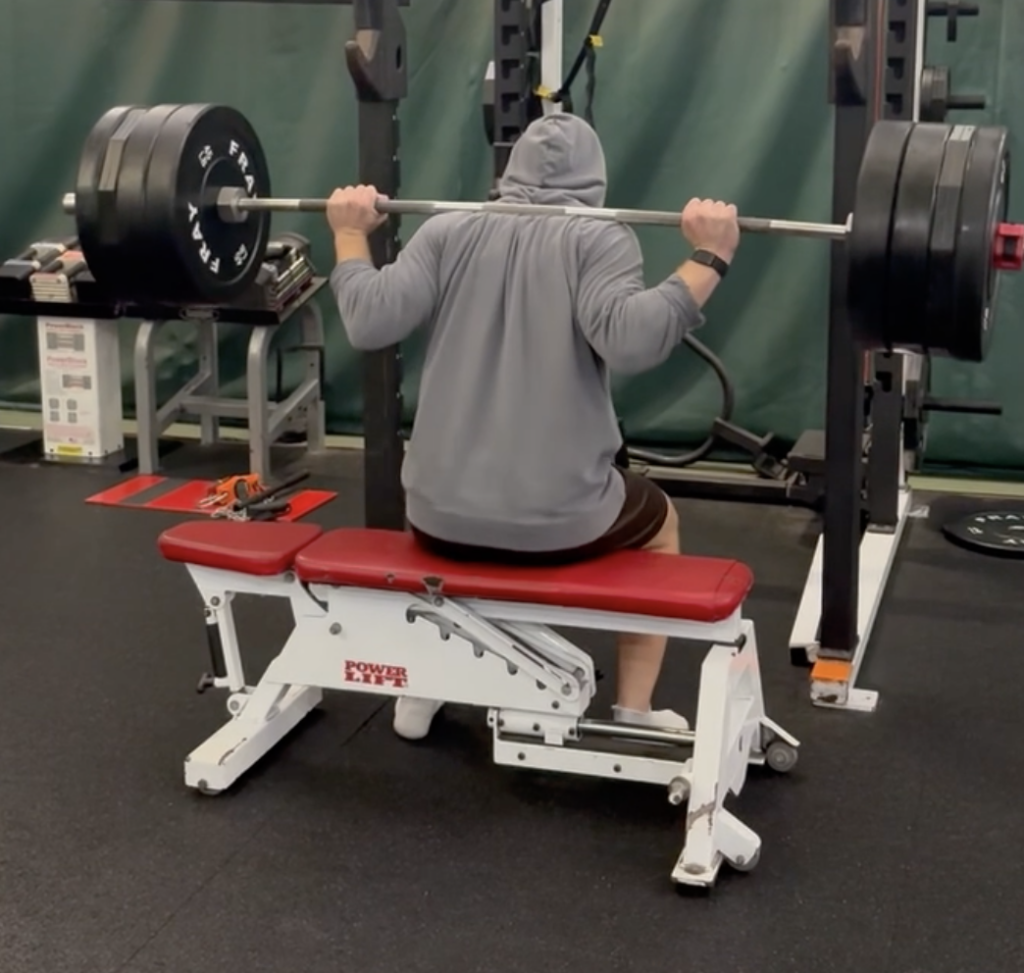
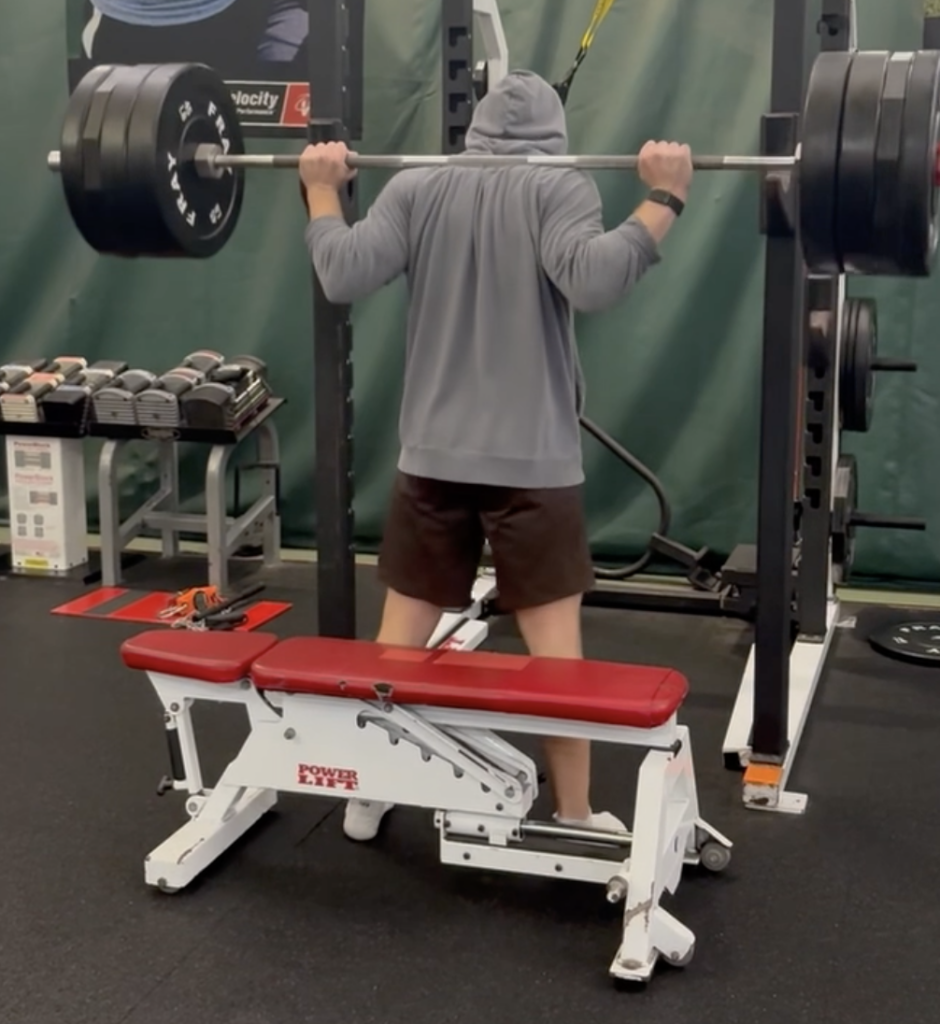
Key focus areas:
- Glutes (hip extension power)
- Hamstrings (posterior chain force production)
- Quads (knee extension strength)
- Calves (ankle stiffness and push-off)
Key lifts:
- Back squats
- Front squats
- Romanian deadlifts (RDLs)
- Trap bar deadlifts
- Bulgarian split squats
Athletes who can produce more force into the ground will always have a higher ceiling for vertical jump improvement.
Develop Explosive Power (Not Just Strength)
Once strength is built, the next step is converting it into speed.
Research from Cormie, McGuigan & Newton (2011) highlights that power training bridges the gap between strength and sport performance by improving how quickly force is produced.
This is where explosive movements come in:
- Jump squats
- Trap bar jumps
- Kettlebell swings
- Olympic lift variations (cleans, snatches)
- Med ball throws (vertical + rotational)

The goal here is simple:
Move heavy or moderate loads FAST.
If strength is “how much force,” power is “how fast you can use it.”
Train Plyometrics for Elastic Power
Plyometric training is one of the most researched methods for improving vertical jump performance.
A meta-analysis by Marković (2007) found that plyometric training significantly increases jump height across athletes of all levels.
Why it works:
- Improves stretch-shortening cycle efficiency
- Enhances tendon elasticity
- Trains reactive strength (ground contact speed)
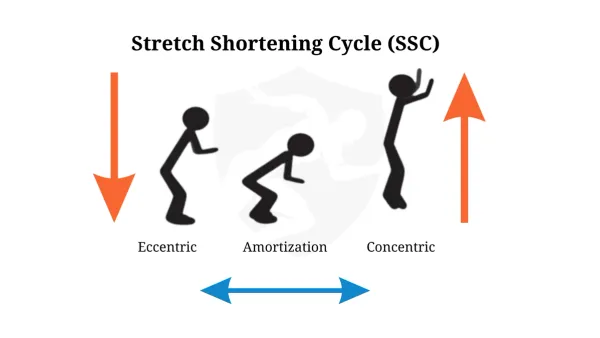
Key plyometric exercises:
- Box jumps
- Depth jumps
- Broad jumps
- Single-leg hops
- Reactive jump series
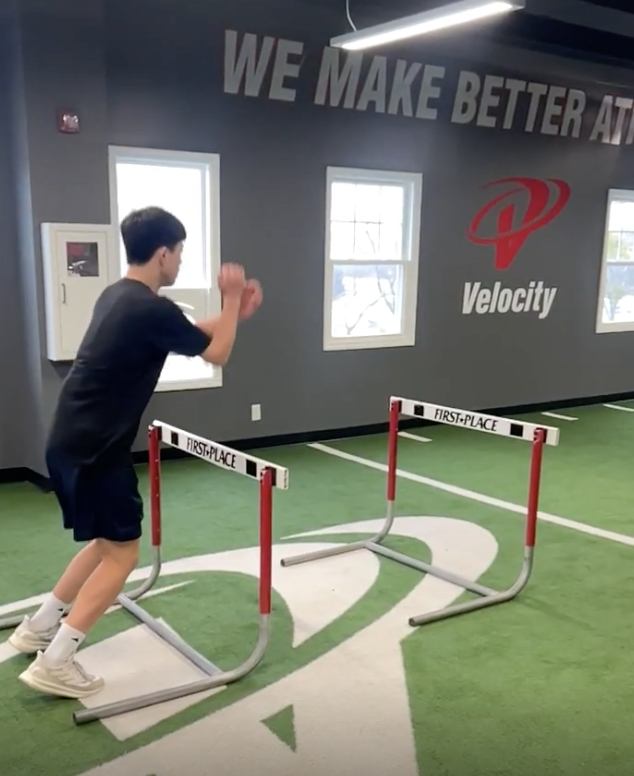
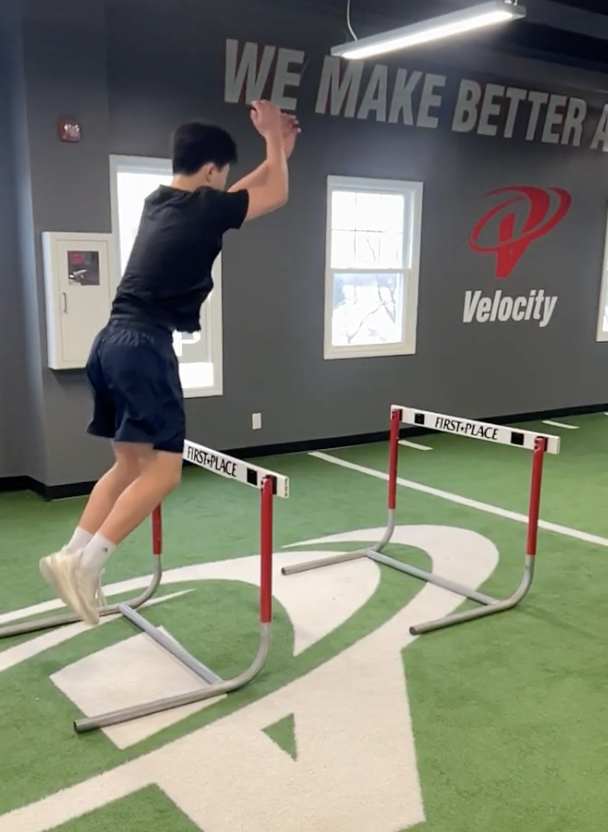
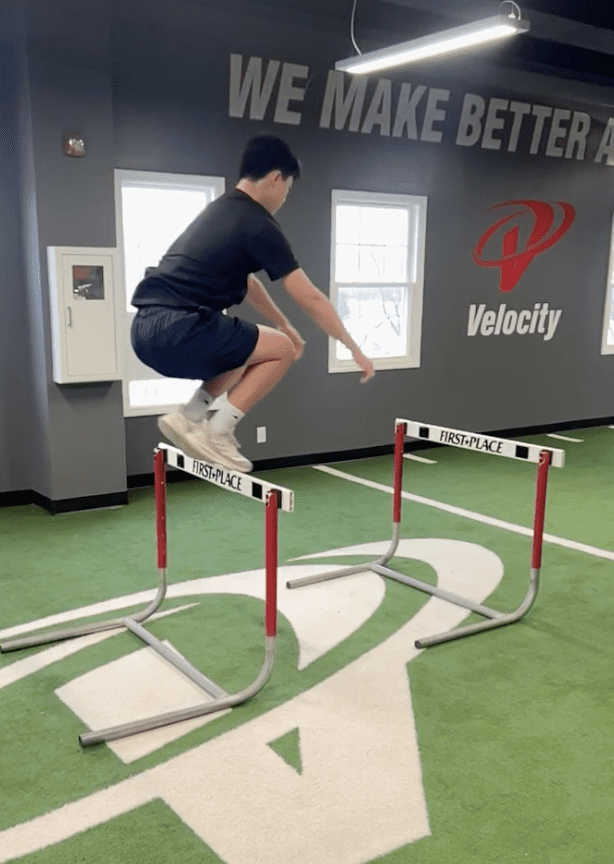
Important coaching note:
Quality > quantity.
If jump height or speed drops, the set is over.
Improve Jump Mechanics and Technique
Even strong, powerful athletes lose inches due to poor mechanics.
Research shows that arm swing, hip positioning, and takeoff angle can significantly impact jump height (Lees, Vanrenterghem & De Clercq, 2004).
Key technical cues:
- Load hips, not just knees
- Use an aggressive arm swing
- Drive through the full foot (not just toes)
- Keep chest up through takeoff
- Finish “tall,” not forward
A common mistake we see:
Athletes try to “muscle” the jump instead of sequencing hips → knees → ankles efficiently.
Better mechanics = instant gains without added strength.
Train Rate of Force Development (Speed Strength)
Vertical jump is heavily dependent on how quickly you can produce force.
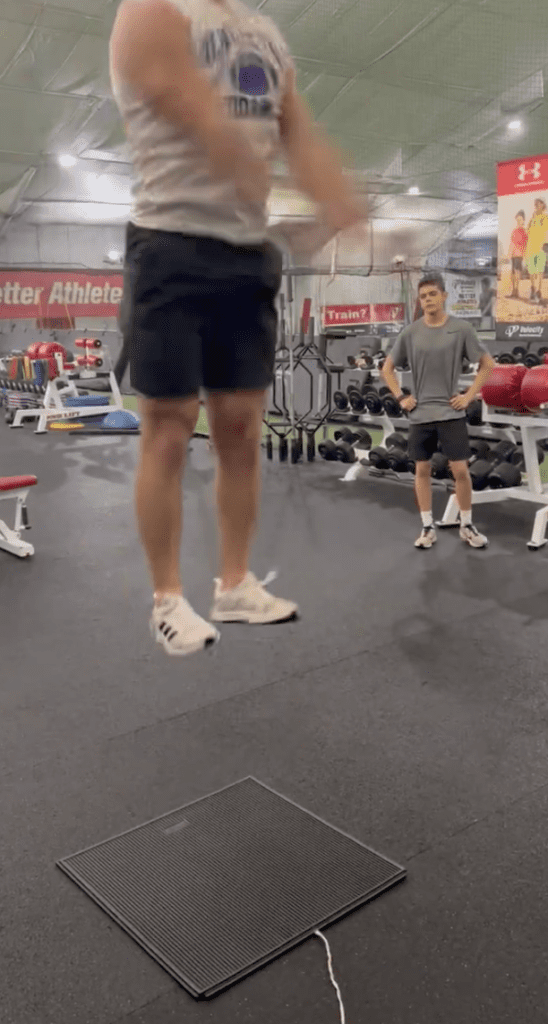
According to research in Sports Medicine, athletes who improve rate of force development (RFD) often see greater improvements in jumping performance than those who only increase strength (Suchomel et al., 2016).
Training methods include:
- Speed squats (light load, max speed)
- Olympic lift derivatives
- Jump variations with minimal ground contact time
- Sprint training (yes—sprinting improves RFD)
Think of it this way:
It’s not just how strong you are — it’s how fast you can express it.
Don’t Ignore Sprint Training
This surprises a lot of athletes, but sprinting is one of the most effective vertical jump developers.
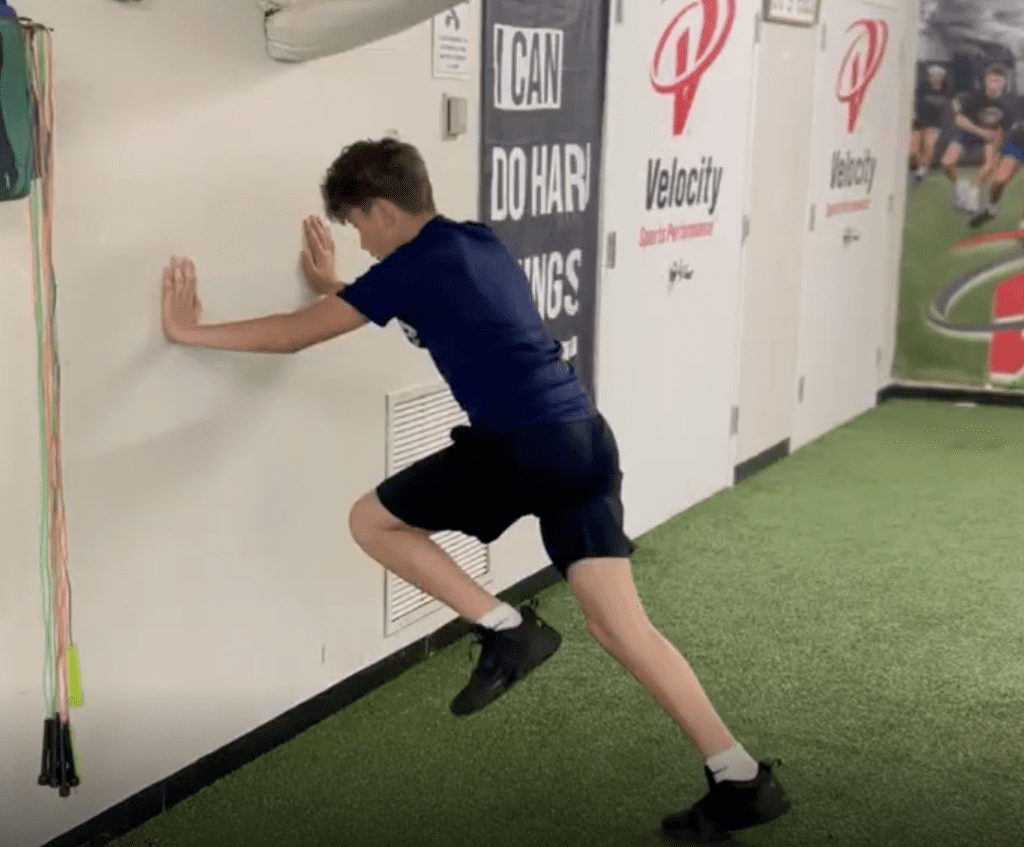
Research shows a strong correlation between sprint speed and jumping ability due to shared neuromuscular demands (Haugen et al., 2019).
Why sprinting matters:
- Trains explosive hip extension
- Improves force production per step
- Reinforces fast-twitch fiber recruitment
Even short sprints (10–30 yards) can carry over to vertical jump improvements.
Train Consistently Year-Round
One of the biggest mistakes athletes make is only training for vertical jumps during the season or right before tryouts.
Long-term athletic development research shows that consistent strength + power training leads to significantly greater performance gains than short-term training blocks (Lloyd & Oliver, 2012).
Off-season focus:
- Strength building
- Power development
- Plyometrics volume
In-season focus:
- Maintenance strength
- Low-volume explosiveness
- Recovery and injury prevention
Athletes who train year-round don’t just jump higher — they stay more explosive when it matters most.
Final Thoughts
Improving your vertical jump is not about one exercise — it’s about developing a complete system of strength, power, speed, and mechanics.
If you want real improvement, focus on:
- Getting stronger
- Becoming more explosive
- Improving jump technique
- Training consistently
- Sprinting and moving athletically year-round
Vertical jump isn’t just a talent trait — it’s a trainable skill.
Train it like one… See ya in the gym!
Written By:
Jake Lebovitch – Assistant Director of Performance & Content Manager
References
Baechle, T.R. & Earle, R.W. (2008). Essentials of Strength Training and Conditioning. NSCA.
Cormie, P., McGuigan, M.R., & Newton, R.U. (2011). Developing maximal neuromuscular power. Journal of Strength and Conditioning Research.
Haugen, T.A., et al. (2019). Sprint performance and vertical jump relationship in athletes. Sports Medicine.
Lees, A., Vanrenterghem, J., & De Clercq, D. (2004). Understanding how an arm swing enhances performance in the vertical jump. Journal of Biomechanics.
Lloyd, R.S. & Oliver, J.L. (2012). The youth physical development model. Strength & Conditioning Journal.
Marković, G. (2007). Does plyometric training improve vertical jump height? A meta-analytical review. British Journal of Sports Medicine.
Suchomel, T.J., Nimphius, S., & Stone, M.H. (2016). The importance of rate of force development in sport performance. Sports Medicine.
