
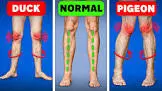
How To: Straighten Your Feet (For Youth Athletes With Postural Imbalances)
Foot position might seem like a small detail, but for youth athletes it often reflects something bigger — how the entire lower body is aligned and controlled.
If your feet turn inward (pigeon-toed) or outward (duck-footed), it’s usually not just a “foot problem.” It’s often linked to how the hips, knees, and ankles are working together.
Over time, this can affect:
- Running efficiency
- Jump mechanics
- Balance and coordination
- Injury risk (especially knees and ankles)
The good news: in many youth athletes, foot position is trainable, especially when addressed early with strength, control, and movement awareness.
Let’s break it down.
What “Feet Turning In or Out” Actually Means
When we talk about foot alignment issues, we’re usually referring to two patterns:
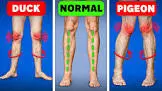
Feet turning inward (toe-in / pigeon-toed)
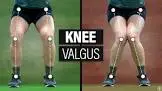
- Knees collapse slightly inward
- Hips may internally rotate too much
- Arch of the foot may flatten under load
Feet turning outward (toe-out / duck-footed)
- Feet point away from center line
- Often linked to limited hip internal rotation or compensation patterns
- Can reduce forward force efficiency in sprinting and jumping
Important point:
The feet are usually adapting to what the hips and knees are doing — not the root cause themselves.
Research in movement science consistently shows that lower-limb alignment is strongly influenced by hip strength, motor control, and neuromuscular coordination (Lees, Vanrenterghem & De Clercq, 2004).
Why This Matters for Youth Athletes
In youth development, movement patterns are still being shaped.
Poor alignment can lead to:
- Reduced sprint efficiency (force leaks side-to-side)
- Less powerful jumps (energy not directed straight down)
- Knee stress (especially valgus collapse patterns)
- Ankles rolling inward or outward under load
Over time, the body adapts to whatever pattern is repeated most often — even if it’s inefficient.
That’s why early correction matters.
Step 1: Build Awareness First
Before changing anything, you need awareness.
Most athletes don’t actually feel their foot position during movement.
Simple checks:
- Stand naturally and look at foot direction
- Squat slowly and notice where knees track
- Film yourself running or jumping
What you’re looking for:
- Do your knees stay in line with your toes?
- Do your feet rotate outward or inward during movement?
- Does one side behave differently?
Awareness is the foundation — you can’t fix what you can’t see.
Step 2: Strengthen the Hip Stabilizers
Foot position is heavily influenced by hip control.
If the hips are weak or inactive, the feet compensate.
Key muscles:
- Glute medius (controls knee alignment)
- Glute max (controls hip extension)
- Deep external rotators (control rotation)
Key exercises:
- Lateral band walks
- Single-leg glute bridges
- Split squats (slow and controlled)
- Step-downs
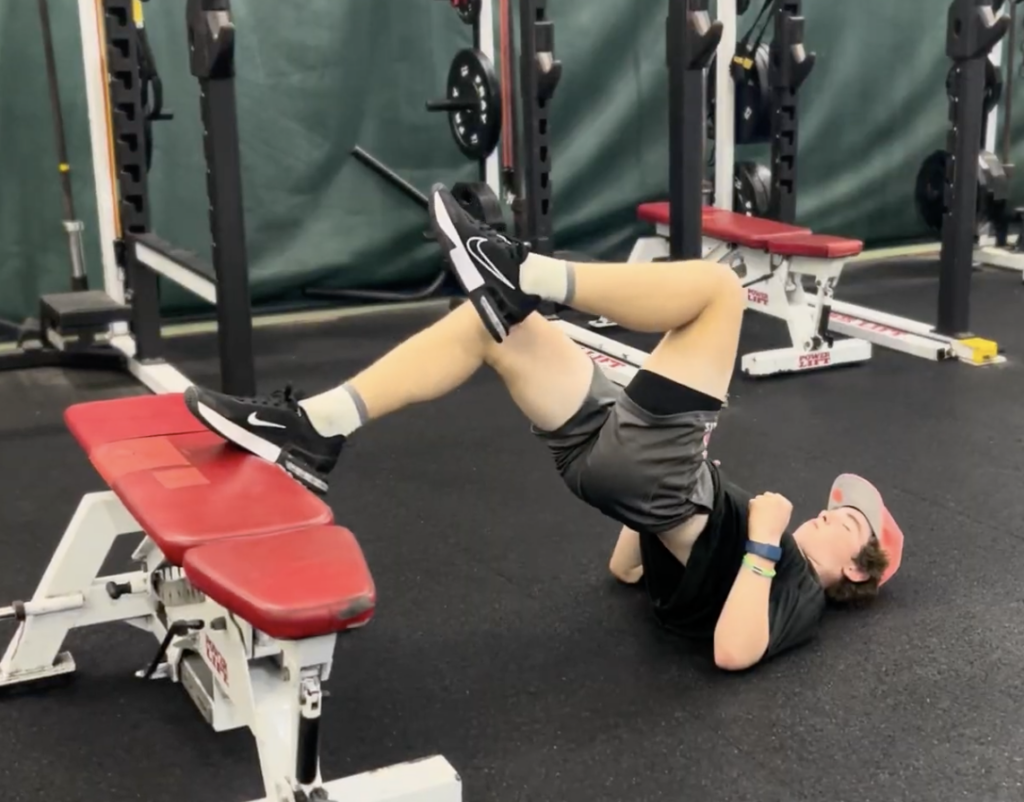
Focus cue:
Knee tracks over the middle of the foot — not collapsing in or drifting out.
Better hip control = better foot alignment automatically.
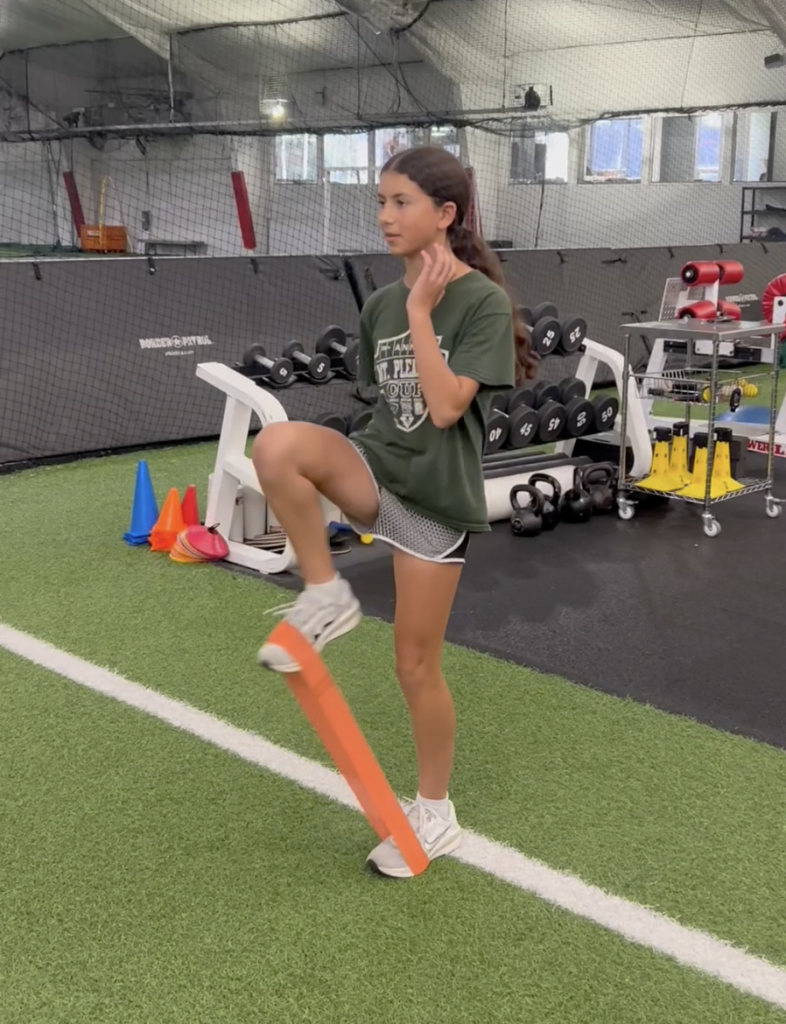
Step 3: Rebuild Foot + Ankle Control
Your feet are not passive — they’re sensors and stabilizers.
When they’re weak or “shut off,” alignment suffers.
Key exercises:
- Short-foot exercises (arch activation)
- Barefoot balance work (single-leg holds)
- Slow calf raises (full range)
- Toe control drills (spread + grip)
The goal is not just strength — it’s control.
A stable foot creates a stable base for everything above it.
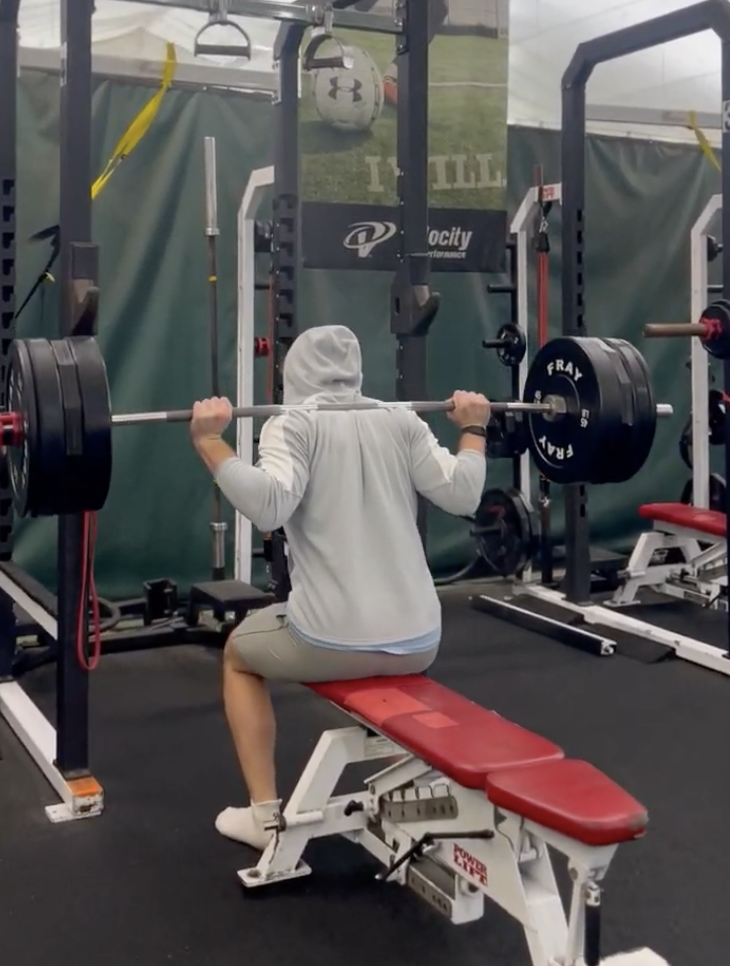
Step 4: Train Proper Squat and Landing Mechanics
Movement patterns matter more than isolated exercises.
In squats:
- Feet should stay grounded evenly (heel + big toe + little toe)
- Knees track in line with toes
- No excessive rolling inward or outward
In jumping/landing:
- Land “quietly” and controlled
- Knees absorb force without collapsing
- Feet stay stable under load
If alignment breaks under load, it will also break in sport.
Step 5: Improve Hip Mobility (Not Just Strength)
Sometimes foot position is a compensation for limited hip motion.
Common restrictions:
- Limited hip internal rotation (leads to toe-out)
- Limited external control (leads to toe-in collapse)
Useful mobility work:
- Hip internal rotation drills
- 90/90 stretches
- Controlled deep squat holds
- Dynamic hip openers
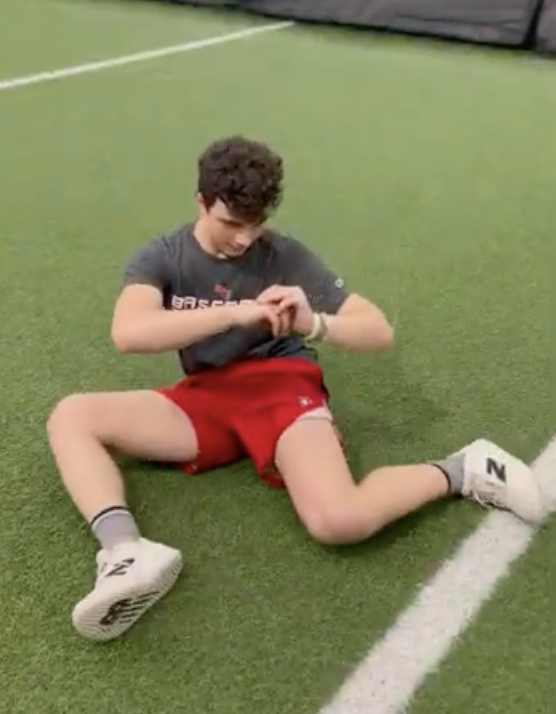
Mobility alone isn’t enough — it must be paired with strength and control.
Step 6: Reinforce in Sport-Specific Movement
This is where change actually sticks.
You don’t fix foot position in isolation — you fix it in motion.
Apply cues in:
- Sprinting
- Jumping
- Cutting and change of direction
- Agility drills
Simple cue:
“Knees forward, feet quiet, push straight into the ground.”
If alignment only exists in training drills but not sport, it won’t transfer.
Common Mistakes
1. Forcing feet straight at rest
Trying to “force” foot position without addressing hips or movement control usually backfires.
2. Only doing foot exercises
Foot strength matters — but it won’t override poor hip mechanics alone.
3. Ignoring one side differences
Most athletes have asymmetry. One side is often more dominant or more restricted.
4. Not training under load
Alignment must hold under stress — not just during slow drills.
Simple Daily Structure for Athletes
Warm-up (5–10 min)
- Short-foot activation
- Lateral band walks
- Bodyweight squats with alignment focus
Strength session
- Split squats
- Step-downs
- Controlled squats
Post-training (optional)
- Light mobility work (hips + ankles)
Consistency matters more than volume.
Final Thoughts
Foot position isn’t just a “cosmetic” issue — it’s a reflection of how the entire lower body is functioning.
For youth athletes, the goal isn’t perfection overnight.
It’s better control, better awareness, and better movement habits that carry over into sport.
When the hips are strong, the feet are stable, and movement is coordinated, alignment usually improves naturally.
And when alignment improves, performance tends to follow:
- cleaner sprint mechanics
- more efficient jumping
- better balance under pressure
- lower injury risk over time
Fix the system — not just the symptom.
Written By:
Jake Lebovitch – Assistant Director Of Performance & Content Manager
References
Lees, A., Vanrenterghem, J., & De Clercq, D. (2004). Understanding lower-limb mechanics in jumping and landing.Journal of Biomechanics.
Lloyd, R.S. & Oliver, J.L. (2012). The youth physical development model. Strength & Conditioning Journal.
Michaud, T.C. (2016). Foot and ankle biomechanics and alignment considerations in athletic populations. Clinical Sports Medicine literature.
Neumann, D.A. (2017). Kinesiology of the Musculoskeletal System. Elsevier.
