

How To: Train Your Core (Not Just Your Abs)
One of the biggest misconceptions in fitness is that having strong abs means you have a strong core.
While crunches and sit-ups can strengthen your abdominal muscles, they only train one part of a much bigger system.
Your core is responsible for stabilizing your spine, transferring force between your upper and lower body, and helping you move efficiently every time you sprint, jump, lift, or change direction. Research consistently shows that core stability plays an important role in athletic performance by improving movement efficiency, balance, and force transfer throughout the body (Kibler, Press & Sciascia, 2006).
The good news: building a stronger core doesn’t require hundreds of crunches.
It requires training your body to stay strong and stable while you move.
Let’s dive into it!
Why Your Core Matters More Than Your Abs
When most people think about core training, they picture six-pack abs.
But your abs are only one piece of the puzzle.
Your core also includes:
- Internal and external obliques
- Transverse abdominis
- Lower back muscles
- Diaphragm
- Pelvic floor
- Glutes
- Deep hip muscles
Together, these muscles create a stable foundation that allows your arms and legs to generate force efficiently. According to McGill (2016), the primary role of the core is to stabilize the spine while allowing the rest of the body to move effectively.
Think of it this way:
Your abs help create movement. Your core helps control it.
Why Core Strength Improves Athletic Performance
Every athletic movement starts from the middle of your body.
Whether you’re sprinting down the field, jumping for a rebound, throwing a baseball, or changing direction, your core connects everything together.
If your core isn’t stable, force leaks before it ever reaches your arms or legs.
Research has shown that athletes with better core stability are often able to transfer force more efficiently, improving movement quality and overall athletic performance (Kibler et al., 2006).
For athletes, that can mean:
- Faster sprinting
- More powerful jumps
- Better balance
- Stronger lifts
- Improved change of direction
A stronger core doesn’t just help you look athletic.
It helps you perform like one.
Train Stability Before You Train Strength
One of the biggest mistakes athletes make is focusing only on movement.
They twist.
They bend.
They do endless crunches.
But one of the core’s most important jobs is actually resisting movement.
Your trunk should be able to stay stable while your arms and legs create force.
Exercises like:
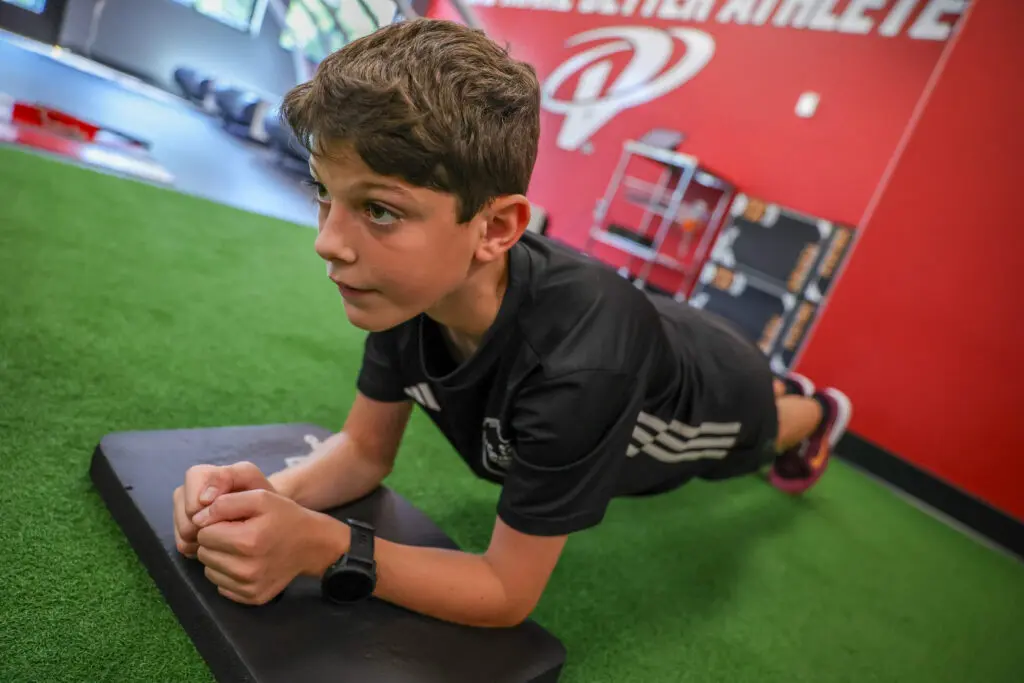
- Front planks
- Side planks
- Dead bugs
- Bird dogs
teach your body how to control your spine under load.
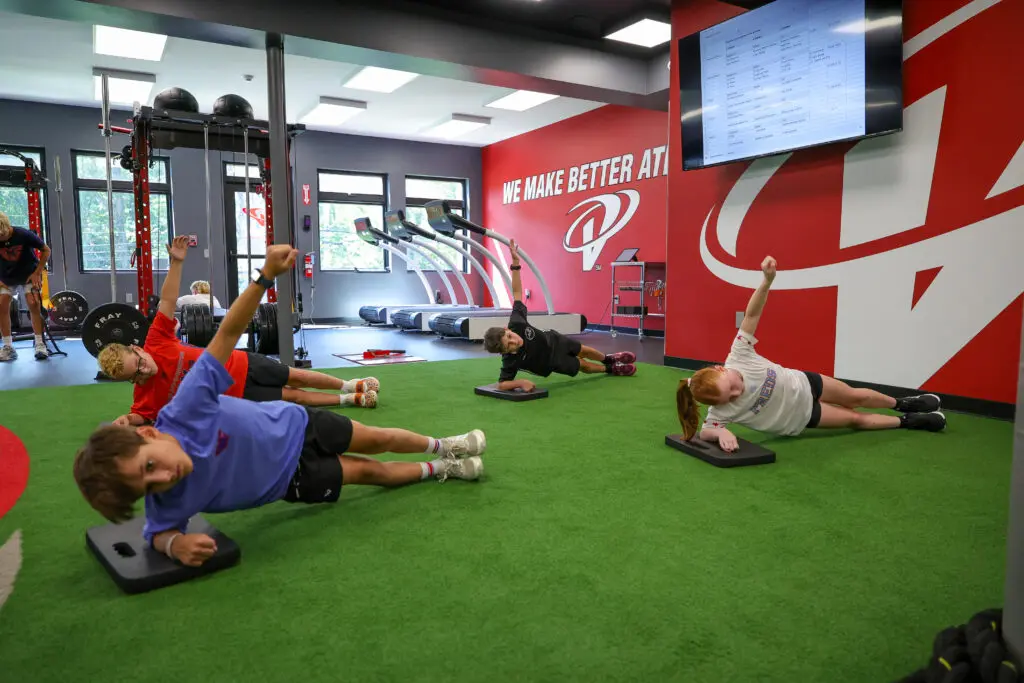
Research from McGill (2010) suggests that trunk endurance and stability are often more important than maximal abdominal strength for both athletic performance and spinal health.
The goal isn’t to hold a plank for five minutes.
The goal is maintaining perfect control.
Train Your Core Like an Athlete
Athletes rarely perform lying on their backs.
They perform standing up.
That’s why your core training should eventually look more like your sport.
Great exercises include:
- Farmer’s carries
- Suitcase carries
- Pallof presses
- Landmine presses
- Single-arm overhead carries
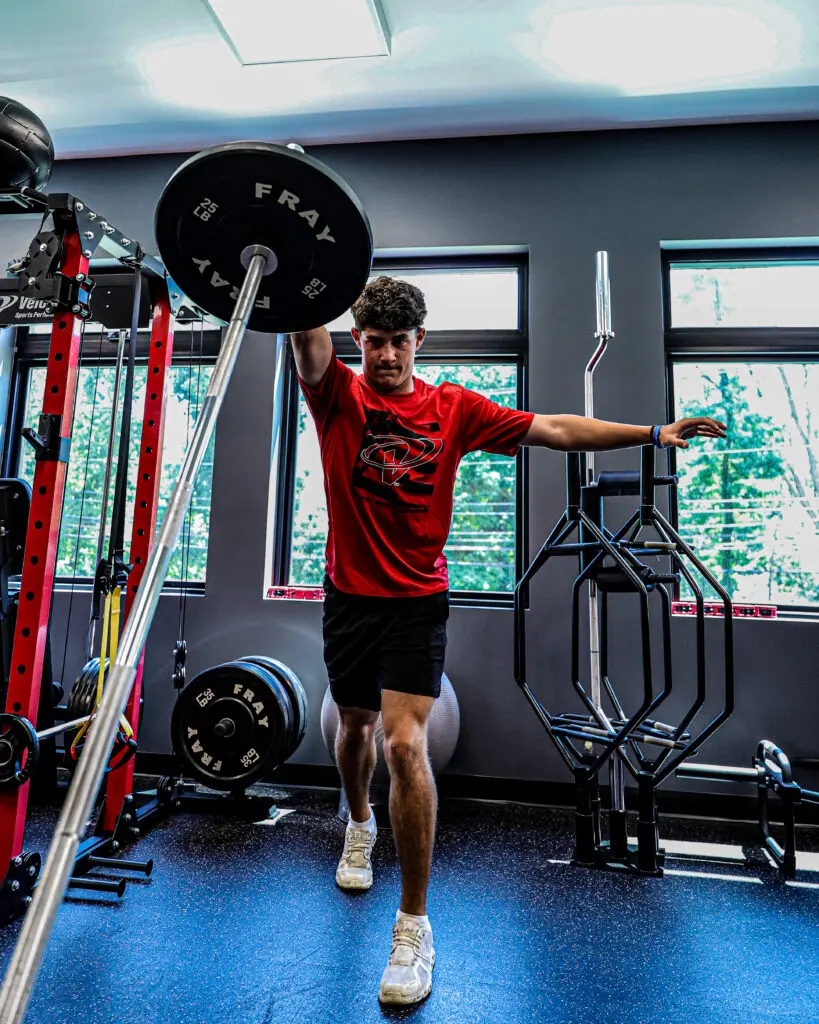
These movements challenge your body to stabilize while your arms and legs move.
According to Willardson (2007), integrated core training has greater carryover to athletic performance than isolated abdominal exercises because it better reflects how the body functions during sport.
Don’t Forget Rotational Strength
Very few sports happen in a straight line.
Lacrosse.
Basketball.
Baseball.
Golf.
Hockey.
Tennis.
Volleyball.
Nearly every sport requires athletes to produce and control rotational force.
Exercises like:
- Medicine ball rotational throws
- Cable rotations
- Half-kneeling chops
- Lift patterns
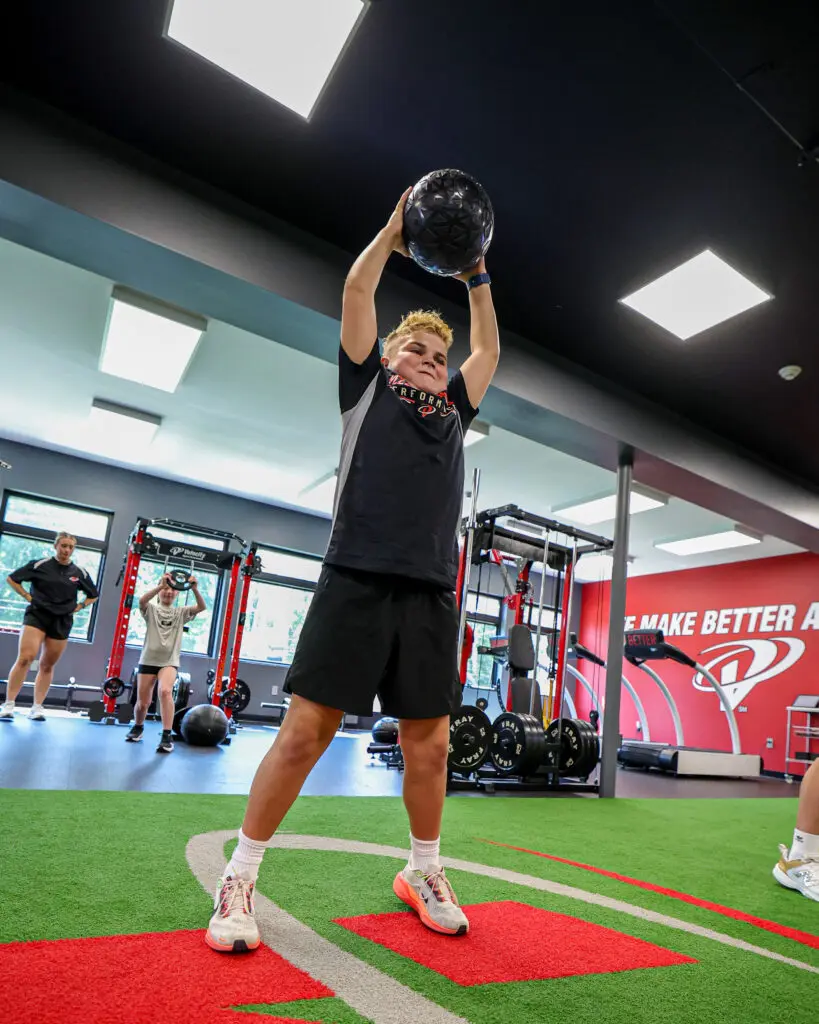
help improve rotational strength while teaching the core to transfer force efficiently.
Research suggests that rotational power depends more on efficient force transfer through the trunk than simply having strong arms or shoulders (Kibler et al., 2006).
Train Your Core Through Big Lifts
One of the best ways to build a stronger core isn’t adding another ab exercise.
It’s getting stronger in movements that naturally challenge your trunk.
Exercises such as:
- Front squats
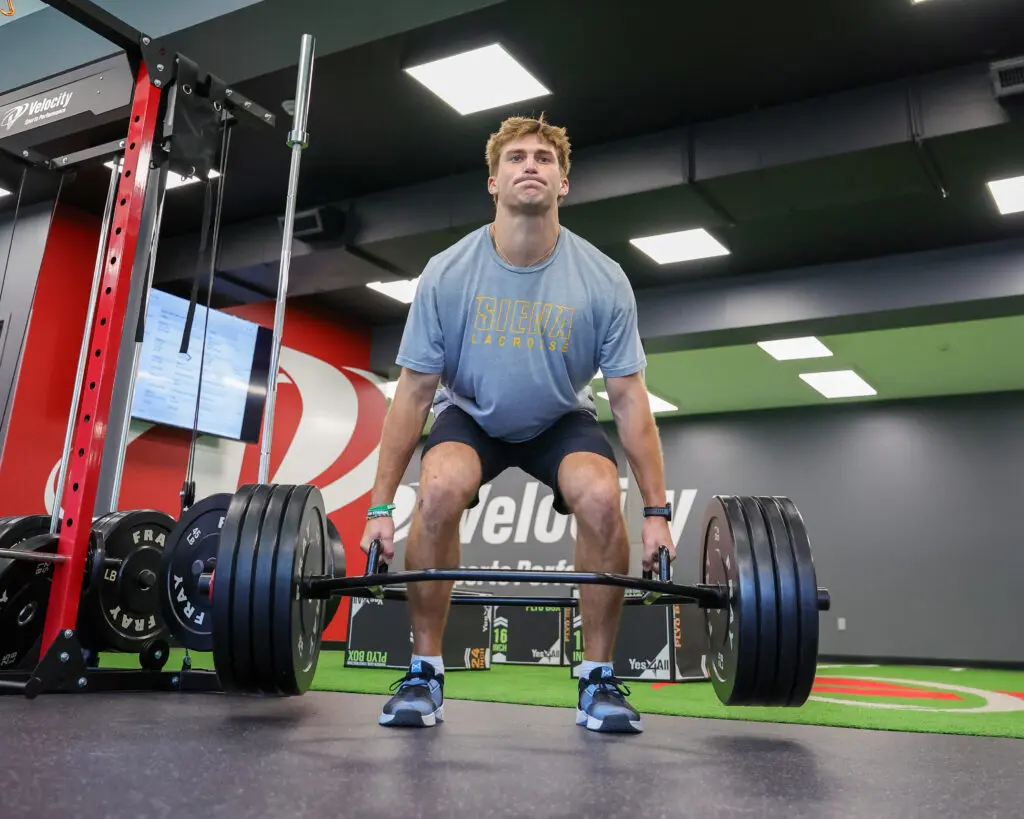
- Romanian deadlifts
- Split squats
- Single-leg exercises
- Overhead presses
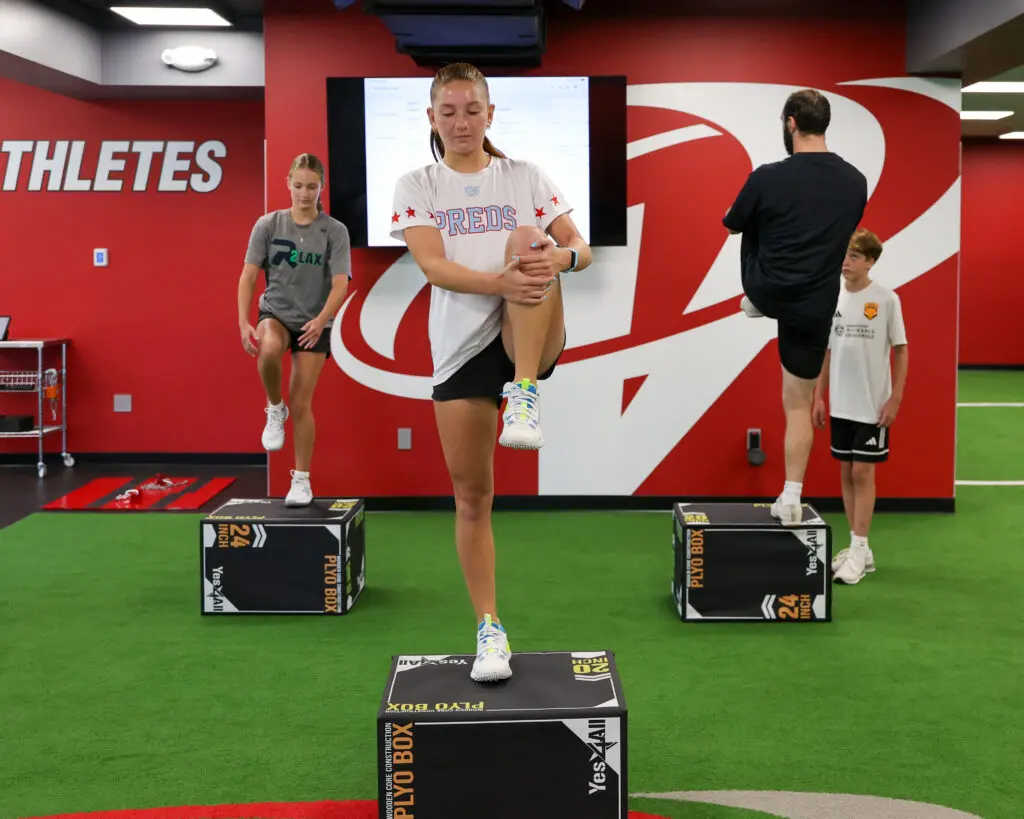
all require your core to stabilize your body while producing force.
Research has shown that standing and loaded movements increase activation of the trunk musculature because the body must continuously resist unwanted movement and maintain posture (Behm et al., 2010).
This is much closer to how your core works during competition.
Common Core Training Mistakes
1. Only training your abs
Your abs are only one part of your core.
Strong athletes train the entire system.
2. Chasing the burn
Feeling your abs doesn’t always mean you’re improving performance.
Quality movement is more important than soreness.
3. Ignoring breathing
Your diaphragm is one of the most important core muscles.
Proper breathing helps create stability and allows you to produce force more efficiently during athletic movement (McGill, 2016).
4. Never progressing
If you’re doing the same plank every workout, eventually your body stops adapting.
Just like every other muscle group, your core needs progressive overload to continue improving.
Simple Core Training Plan
For most athletes, two or three focused sessions each week is plenty.
Start with stability:
- Dead bugs
- Bird dogs
- Side planks
Progress to anti-movement:
- Pallof presses
- Farmer’s carries
- Suitcase carries
Finish with athletic movements:
- Medicine ball throws
- Rotational chops
- Single-leg strength exercises
Keep the focus on quality movement—not just counting reps.
Final Thoughts
Strong abs might improve how you look.
A strong core improves how you perform.
Your core is responsible for stabilizing your body, transferring force, and helping every athletic movement become more efficient.
If your goal is better performance, don’t train your core like it’s just another muscle group.
Train it the way your body actually uses it.
Build stability.
Develop strength.
Move with control.
Because when your core gets stronger, everything else has a better foundation to perform at its best.
Written By:
Jake Lebovitch – Assistant Director of Performance & Content Manager
References
Behm, D.G., Drinkwater, E.J., Willardson, J.M., & Cowley, P.M. (2010). Canadian Society for Exercise Physiology position stand: The use of instability to train the core in athletic and nonathletic conditioning. Applied Physiology, Nutrition, and Metabolism, 35(1), 109–112.
Kibler, W.B., Press, J., & Sciascia, A. (2006). The role of core stability in athletic function. Sports Medicine, 36(3), 189–198.
McGill, S.M. (2010). Core training: Evidence translating to better performance and injury prevention. Strength & Conditioning Journal, 32(3), 33–46.
McGill, S.M. (2016). Low Back Disorders: Evidence-Based Prevention and Rehabilitation (3rd ed.). Human Kinetics.
Willardson, J.M. (2007). Core stability training: Applications to sports conditioning programs. Journal of Strength and Conditioning Research, 21(3), 979–985.