
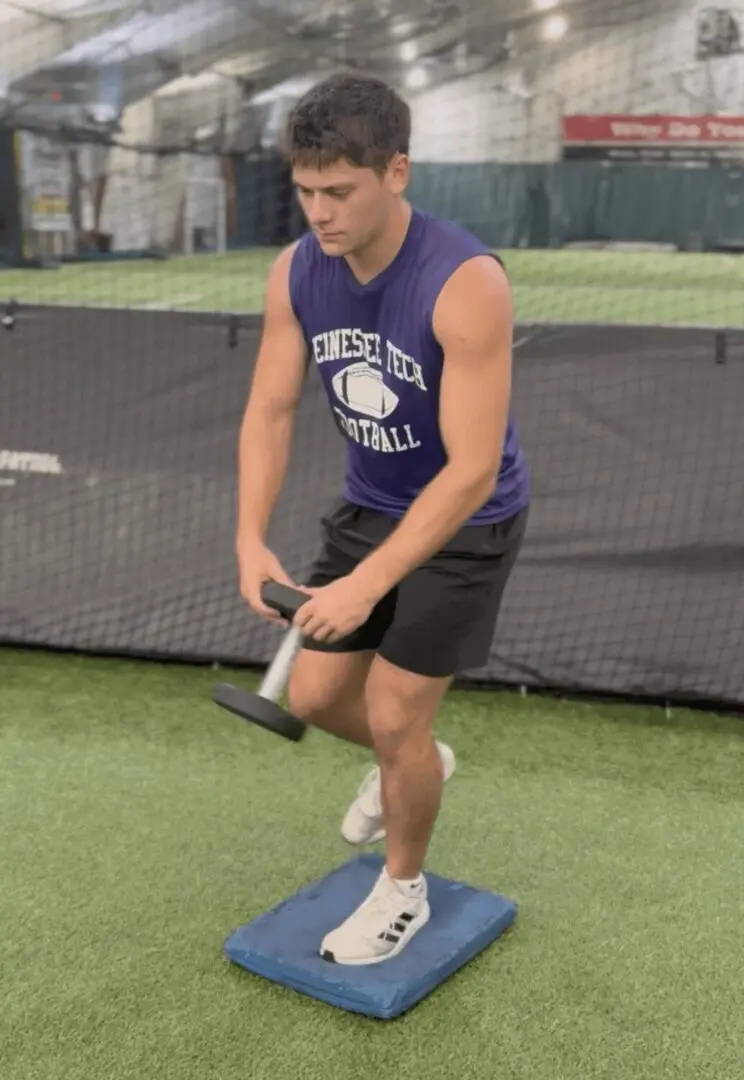
Single Leg Stability… An Athletic Development Must.
What is single leg stability & why is it so important to your athletic development?
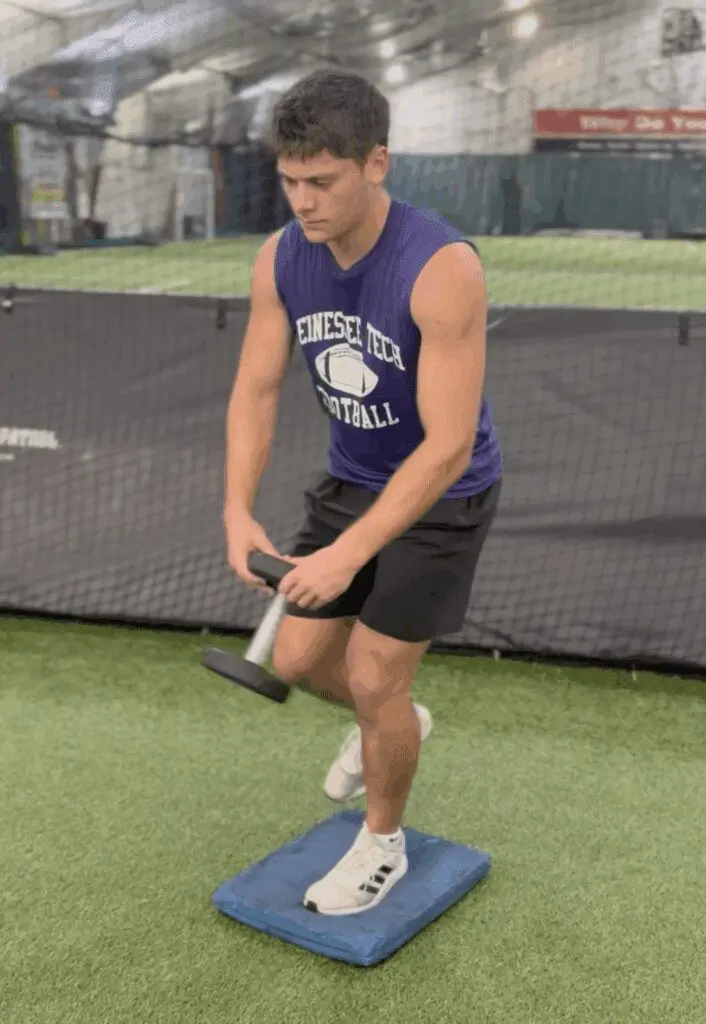
Stability as a whole is the ability to resist force and maintain control & efficiency through a given movement. When standing on one leg, single leg stability is referred to as, the muscles of the hip, pelvis, core, & ankle working synergistically to maintain balance & coordination. The activation of these muscles in unison could help improve power production, overall lower body posture, & even prevent injuries.
Let’s dive in & see why exactly single leg stability is so important & how you can train it as part of your athletic development plan!
Understanding more on what single leg stability actually is:
As mentioned above, single leg stability is referred to as, the muscles of the hip, pelvis, core,& ankle working synergistically to maintain balance & coordination. Therefore, when the muscles, ligaments, & bones around a joint are too weak they will no longer have the ability to maintain the proper alignment & will be unable to keep the balance & coordination needed in sport.

This can be caused by a couple of different things:
- Under-developed muscular strength.
- Oftentimes, instability is present in youth athletes due to their physical immaturity. The muscles aren’t yet fully developed & most likely they haven’t been exposed to much strength training at this phase of their lives.
- Ex: 12 year old lacrosse player comes into VSP for an initial assessment. Has never partaken in strength training formally. Presents symptoms of single leg instability.
- Overuse
- Sometimes, repeated movements without proper strengthening & recovery can cause instability within a joint.
- Ex: 16 year old baseball pitcher throws multiple innings in back to back spring & summer seasons without utilizing strength training and recovery tools to combat his workload. Shoulder instability symptoms begin to occur.
- Multidirectional instability – “Double Jointed”
- People can be born with naturally increased amounts of laxity around their joints.
- Ex: 8 year old basketball player naturally stands with knees hyper-extended. Especially when performing single leg movements.
Now, why have we focused more here on a single leg? Why are we talking about unilateral (single leg) stability instead of bilateral (2 leg) stability.
The reason, so much of sports are performed one leg at a time. Running, cutting, stopping, throwing… This list could continue on & on. But why is a lack of stability even important? How can it negatively impact your performance on the field? Lack of stability can lead to injury…

Let’s dive into that.
How single leg instability can increase risk of injury:
As mentioned above, overall single leg stability consists of a variety of smaller complexes that need stability individually as well. For example: ankle joint, hip joint, etc.
Since our bodies work as a whole, when certain parts are not performing optimally, our bodies find a way to move using another muscle or joint in a less efficient manner. Thus, inefficient stabilization could lead to compensation & eventually injury.
Lets use ankle sprains for example.
An ankle sprain typically happens when the foot twists inward, overstretching or tearing the lateral ligaments of the ankle. Proper stability of the ankle joint is critical in preventing such injuries. However, another key component in their prevention?

Hip strength & stability.
Here’s how:
- The hip joint is crucial for overall balance & coordination. This is even more evident in single leg movements & change of direction movements. Stronger hip muscles help stabilize the whole leg & also allows for better foot placement control. This could help reduce the risk of rolling or spraining the ankle.
- If the muscles around the hip joint are weak, knee values (inward movement) can occur which places added stress on the ankles & knees.
- The muscles around the hip joint help absorb forces that occur when sprinting & jumping. Weaker & more unstable hip joint, the more force & stress is transferred down the chain to the knee & ankle. Therefore, increasing the likelihood of lower limb injuries.
- This becomes even more prevalent during high impact movements.
- Strong muscles around the hip joint, especially the glute muscles, help control the movement and rotation of the leg. Proper alignment and movement of the leg during activity can reduce the likelihood of a roll or sprain of the ankle.
- Without the proper alignment, the body may lose some of its proprioceptive ability. This is the body’s ability to sense its position in time & space. This challenge could increase the risk of injury when performing sudden change of direction movements within sport.
These examples are a perfect way to show how each complex (ankle, hip, etc) needs their own individual stability. However, they all work together to create overall single leg stability.
So, if one link is weak… the whole chain is weak.
How single leg instability impacts performance:
Let’s take sprinting for example:
If there is instability within the ankles or pelvis, it will take longer to absorb force, store it, & release the energy during the sprint. This longer process results in a longer ground contact & shorter stride length. The reason for this is that when sprinting the athlete is supporting their whole bodyweight on a single leg in addition to the disruptive forces that are acting on the body as well.

Jay Dicharry, a physical therapist & author of the book “Running Rewired”, estimated that, the lateral forces your body has to support equal to 10-15% on your body weight, the acceleration & deceleration forces equal to 40-50% of your body weight, & the vertical forces could be as much as 2.5x to 3x your body weight. So, if the body isn’t stable enough to support these forces, it will not be able to coordinate them into a high level sprint, cut, dodge, etc…
Oftentimes coaches will try to cue their athletes to fix these issues. However, if there is a physiological deficiency, the cues will only go so far.
How to improve single leg stability:
There are two main ways that we like to improve single leg stability at VSP.
- Strengthening the individual components of the single leg complex.
- Individual ankle strengthening, individual hip strengthening, etc.
- Strengthening the entire complex with single leg compound movements.
- Single leg squats, single leg RDLs, etc.
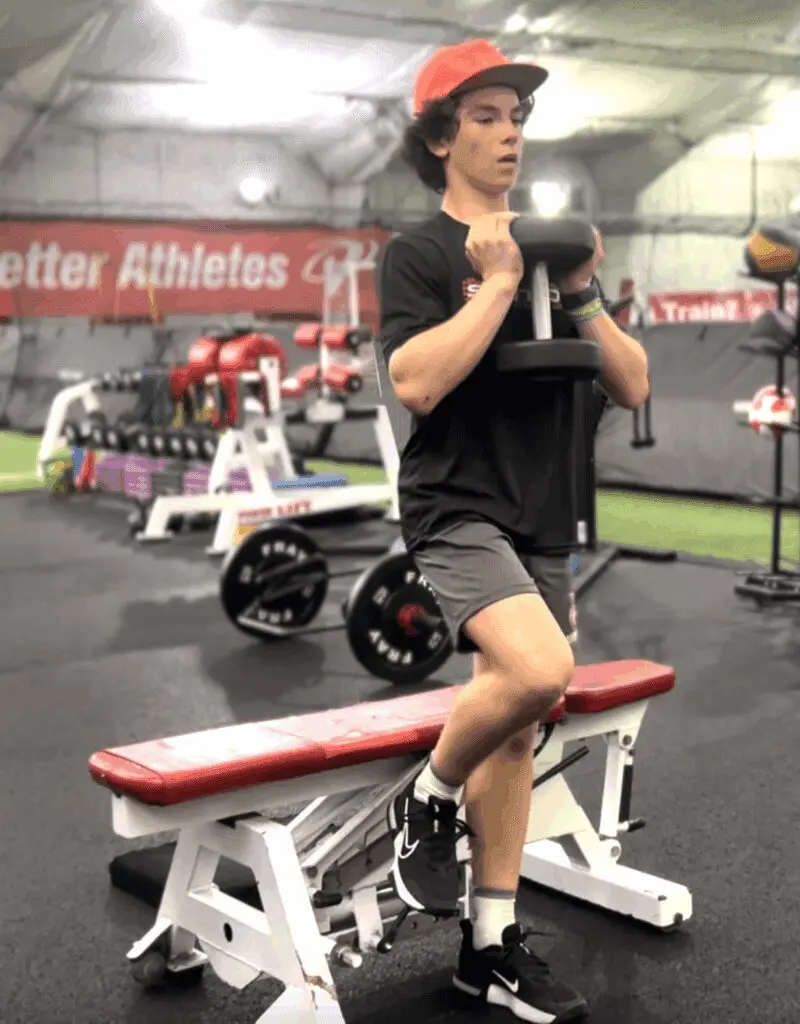
Regardless of how, strength training is the key to improving instability. If we can strengthen the muscles, ligaments, etc around the joint & create environments for the athlete to co-contract these muscles simultaneously; then we will be improving the ability to stabilize on one leg.
Let’s dive into some examples:
- Individual ankle strengthening
- SL KB around the world
- Calf raises + Tibialis Raises
- Individual hip strengthening
- Hip flexor marches
- Straight leg abduction raises
- Single leg compound movements
- SL pistol squat
- SL RDL
Now what?
Now that you know what single leg stability is, why it’s important, how it can impact risk of injury, how it impacts performance, & how to train it… Think about if this is something affecting you, your teammates, or athletes around you.
If it is…then what are you waiting for?! Join us at VSP & start improving your single leg stability today!
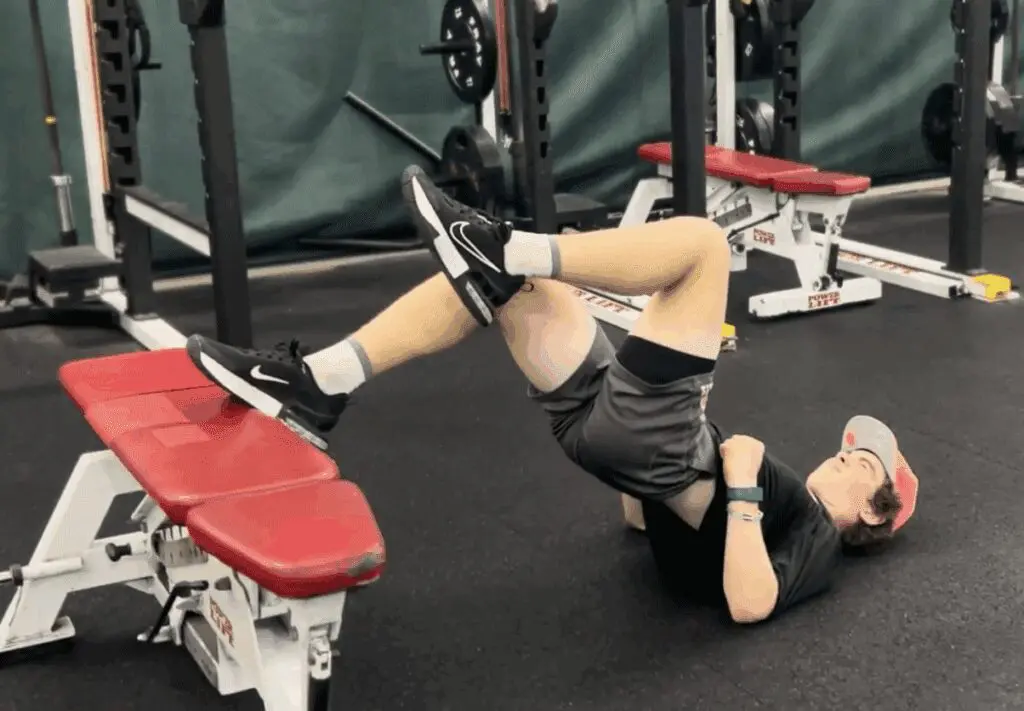
As always, see ya in the gym!
Written by:
Jake Lebovitch – Assistant Director of Performance & Content Manager
Sources:
- Office. (2023, June 8). The importance of single leg stability for athletes. BeFit Training Physiotherapy Coogee. https://coogee.befittrainingphysio.com/the-importance-of-single-leg-stability-for-athletes/#:~:text=When%20standing%20on%20one%20leg,proper%20posture%2C%20and%20preventing%20injuries.
- Joint instability, causes symptoms, and treatment. UPMC. (n.d.). https://www.upmc.com/services/orthopaedics/conditions/instability#:~:text=What%20Is%20Joint%20Instability%3F,must%20be%20stable%20and%20strong
- Pelvic stabilization, lateral hip and gluteal strengthening … (n.d.-a). https://uhs.princeton.edu/sites/g/files/toruqf5356/files/documents/Pelvic-Stabilization-Hip-Strengthening.pdf
- Matthewsonortho.com. (2024, October 30). Ankle sprain risk and the role of Hip Strength – Matthewson Orthopedics. Matthewson Orthopedics – Strength Starts Here. https://matthewsonortho.com/ankle-sprain-risk-and-the-role-of-hip-strength/#:~:text=Balance%20and%20Stability%3A%20The%20hips,of%20ankle%20rolling%20or%20twisting.
- Mvumvure, G. (2025, June 28). How stability impacts speed (and 4 single-leg workouts to improve both). SimpliFaster. https://simplifaster.com/articles/how-stability-speed-single-leg-workouts/
- Mastering stability to maximise strength | Australian Institute of Fitness. (n.d.-a). https://fitness.edu.au/the-fitness-zone/mastering-stability-to-maximise-strength/
