
What Are Your Goals—and How Do You Actually Reach Them?
“I want to be faster.” It’s one of the most common answers we hear when an athlete walks into a Velocity Sports Performance facility. It’s also one of the most vague…

We all have goals. But the problem isn’t the lack of desire—it’s the lack of clarity and structure. You may want to be faster, stronger, more explosive, or more agile. But do you really know what that means or how to get there?
Let’s break it down and give your goals a real plan of attack.
Step 1: Define the Goal—Clearly
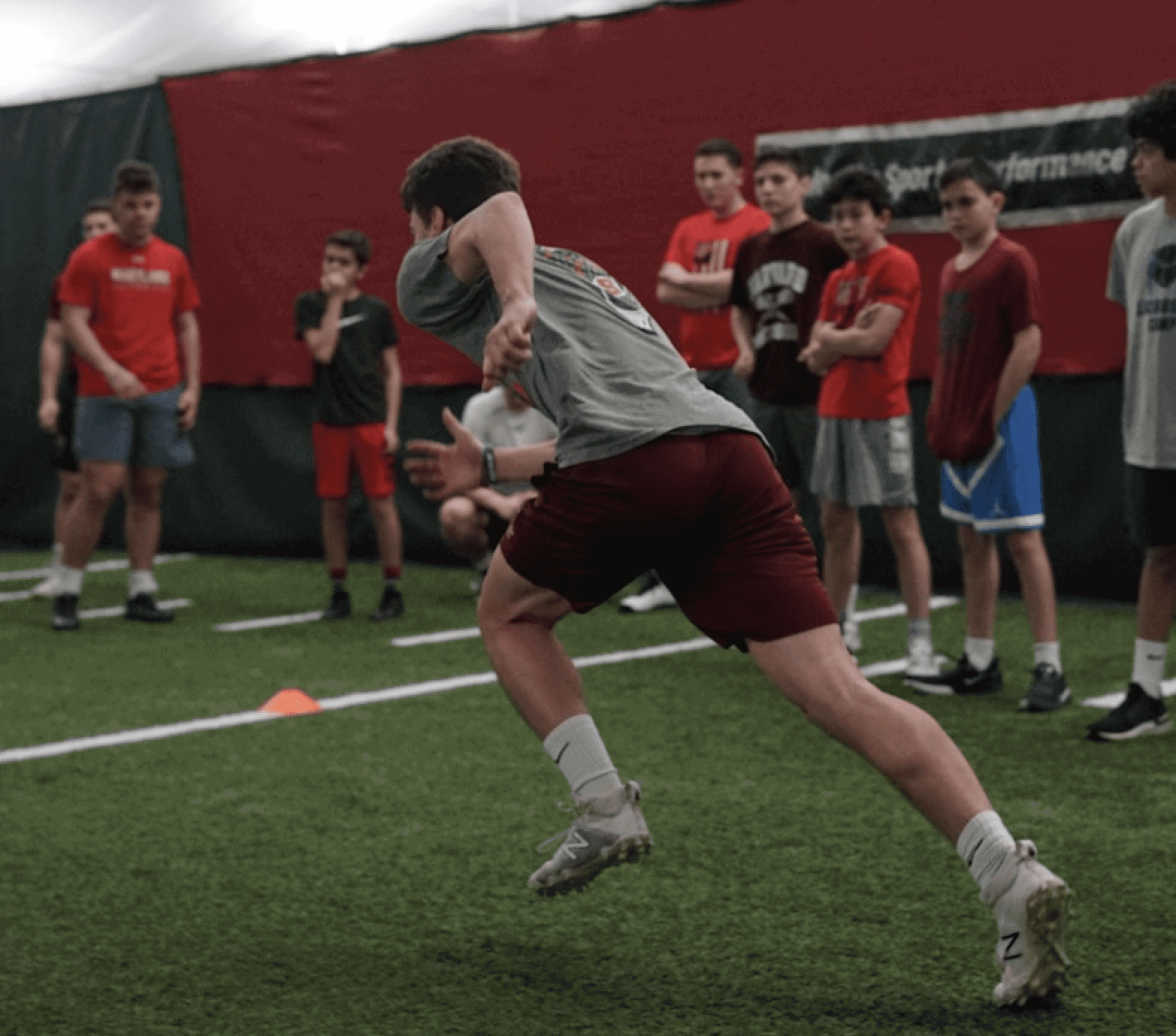
Let’s use linear acceleration (your ability to go from a standstill to full speed in a straight line) as our example. It’s one of the most sought-after athletic qualities.
But here’s the thing:
You can’t just “run more” and expect to get faster. In fact, doing that without proper structure can actually make you slower.

So what does it take to get faster?
Improving linear acceleration (or any athletic ability) requires development in three key areas:
- Quality of Movement – how well you move (a.k.a. your form/mechanics)
- Force Production – how much power you can generate and apply
- Sport-Specific Integration – how well you can apply those qualities in game-like situations
Let’s dive into each.
1. Quality of Movement
Before you can sprint faster, you have to move better.
Poor movement is like a leaky hose—it doesn’t matter how much water (or potential) you have; it won’t get to where it needs to go. Inefficiencies in form waste energy, reduce speed, and increase the risk of injury.

At Velocity, we prioritize movement quality right from the start of every session. What most call a “warm-up,” we refer to as corrective activation—10–12 minutes designed to prepare your body for the demands of the session ahead.
Example: Wall Mechanics Circuit
- A March
- A Skip
- Double Skip
- Wall Run

These drills reinforce proper acceleration mechanics:
- 45° torso lean
- Rear leg in full extension
- Front knee driving above the hip

But let’s be clear—good form alone won’t make you fast. Perfect form with no force is just… a statue.
So what’s next?
2. Increased Force Production
To accelerate faster, you need to produce more force—quickly. This is where strength training and power development come in:
Improving the strength of the muscles used in sprinting (hips, glutes, quads, hamstrings) helps you apply more force to the ground. Power training increases your rate of force development—how quickly you can produce that strength.

This is developed through:
- Strength training (e.g. step-ups, squats, lunges)
- Plyometrics (e.g. jumps, bounds, explosive movements)
These tools give you the horsepower behind the movement. Combined with good mechanics, you’re on your way to real acceleration gains.
But there’s still one more piece.
3. Sport-Specific Integration
This is where it all comes together.
We take the improved movement quality and force production and put it into drills that replicate what athletes will actually face in their sport. This isn’t gimmicky, “skills-practice-in-the-weight-room” work. It’s neuromuscular integration—training your brain and body to use those new tools under pressure.
That might mean:
- Reacting to a ball drop
- Accelerating out of a backpedal
- Performing a quick change of direction at game speed

These drills translate the work into functional athletic performance.
So, How Does This Look in a Real Session?
Here’s an example of a Velocity Speed session focused on linear acceleration:
Quality of Movement:
- Skip Series: A Skip, B Skip, Power Skip, Raptor Skip
- Wall Mechanics Series: Wall March, A Switch, Double Switch, Wall Run
- Banded Dynamic Series: Banded March, Banded Switch, Banded Run
Force Production:
- Step Ups: Weighted Step-Ups + Step-Up Jumps
- Lunges: Weighted + Unweighted Jumps
- Squats: Weighted + Squat Jumps
Integration:
- Reactive 10-Yard Sprints w/ Ball Drop
- 10-Yard Acceleration into Reactive Backpedal
This is just one of the many session structures we use to train linear speed. The key is in the intentional progression—each phase builds on the last to develop real, transferable athletic qualities.
Final Takeaway
Want to be faster? Stronger? More explosive?
Start by identifying your goal with clarity. Then, follow a plan that develops the right qualities in the right order:
- Move well
- Produce more force
- Apply it under real-world conditions
That’s how you become a better athlete.
Want to see how this can work for your goals? Come train with us here at VSP!
Written By:
Jordan Bledsoe – Owner & Director of Performance
Jake Lebovitch – Assistant Director of Performance & Content Manager
