

The PAR Model
P – Pyramid (of)
A – Advantage (&)
R – Reality
As parents, athletes, and coaches – we are consumed by the moment, fully invested in the fun progression of the present. We don’t know what we don’t know and we can’t draw from things we haven’t experienced.
As my own multi-sport playing career, evolved into my coaching career, and now into guiding my young sons and their friends through their playing careers ~ it has become apparent that there are patterns, or levels to this thing, that most of us drive through blindly without understanding the things we have control over, the elements that create outliers and the broader dynamics we are part of.
Over the years, as I have read stories about the rise of club sports, the evolution of college athletics, the ‘dream job’ we all started with articulated into an actual percentile (0.075%), and the dismissive conventional wisdom about over-structured young children. I started to collect these stats and organize them in my head as a model, a series of buckets, you might say, that we spill into if we are talented enough, work hard enough, are prepared enough, are lucky enough.
Each bucket gets smaller and more exclusive. An eye opening reality check for some. The knife that cuts the tension for others. Society puts great glory on the elite athlete. For good reason. Moving through these levels from 5-25 years old is not a right but also not a chance.
IF IT WERE EASY… EVERYONE WOULD DO IT.
So let’s break down these statistics to bring to light important decisions at hand, understand the difference between entitlement and the exceptional, and experience how pressure can present us with a glimpse at a diamond.
STAGE #1 – 5 Years Old – The Universal Age of Recreational Sport
100% of athletic population can play at this level
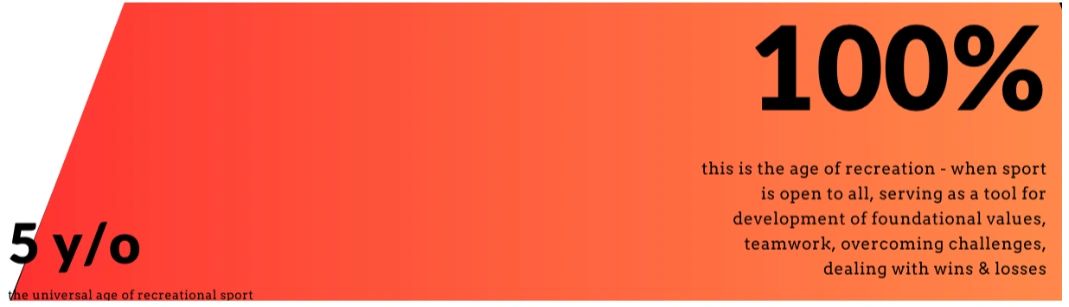
This is the age of recreation – when sport is open to all, serving as a tool for development of foundational values, teamwork, overcoming challenges, and dealing with wins & losses.
Everyone remembers those days! You could be in them now. Saturday morning, dew soaked fields, dusty elementary gyms and your little kicker, your 8’ hooper, your flag footballer. So much to learn for everyone involved. Everyone is there by choice. If you choose it, you can play it.
… worth some thought.
STAGE #2 – 12 Years Old – The Universal Age of Competitive Team Cuts
Only 33% of the original 100% of the athletic population will make it to this level
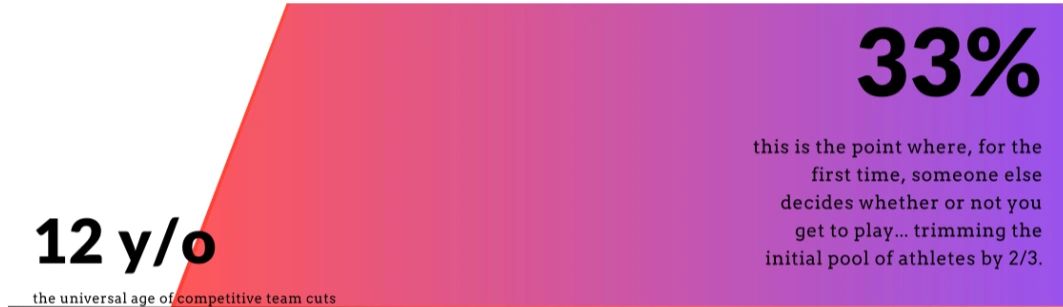
This is the point where for the first time, someone ELSE decides whether or not you get to play… trimming the initial pool by 2/3.
WHOA! Wait a second. 12 years old!?! Think of who you were at 12 years old, think about which friends you played with prior to that, who drifted off to other worthwhile pastimes, or not so worthwhile. Yep, when you put it like that, it was 12, for sure. Structures start being introduced like modified football teams, little league baseball all-stars, CYO/AAU basketball tryouts. Without thinking about it, its hard to realize that a young, disjointed 12 year old, who doesn’t do much with a purpose at that age, can be spilled in or out of a bucket that only fit 1/3 of us.
… worth some thought.
STAGE #3 – 16 Years Old – The Universal Age of Varsity Competition
Only 17% of the original 100% of the athletic population will make it to this level
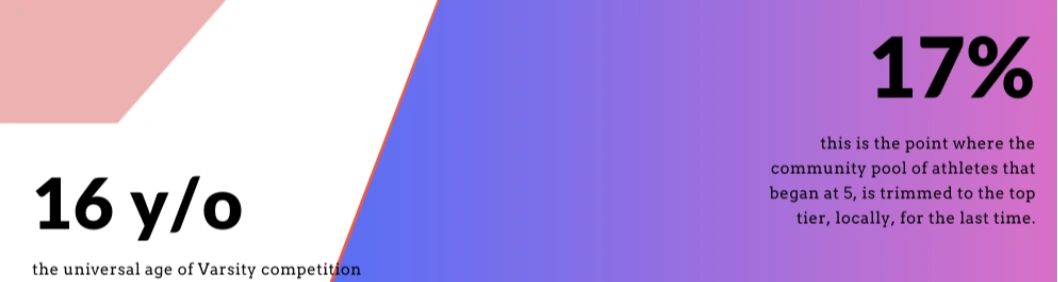
This is the point where the community pool of athletes that began at 5, is trimmed to the top tier, locally, for the last time.
If you are going to public school, Varsity tryouts are still just your neighbors, those who make it are the top of the town. When it’s phrased like that… that’s pretty cool. But thinking back… where were the 83% of my classmates who didn’t make the varsity team, didn’t try out, and hasn’t even played a sport since they were cut back in 6th grade. They had some time on their hands I guess. I was too busy to notice. This was normal. ‘We all did it’. Well, I guess we didn’t. As a matter of fact, almost none of us did it.
I wonder, had I been exposed to these stats at that time, would I have been less stressed about it? It’s possible that I would have enjoyed it more, relished the achievement a bit more. Or maybe… my response to that pressure was the value, the trials that gave me the tools to cope with real life adversity ~ be led hard, lead hard ~ maybe they molded me into the person I am today.
… worth some thought.
STAGE #4 – 18 Years Old – The Universal Age of Intercollegiate Athletics
Only 2% of the original 100% of the athletic population will make it to this level
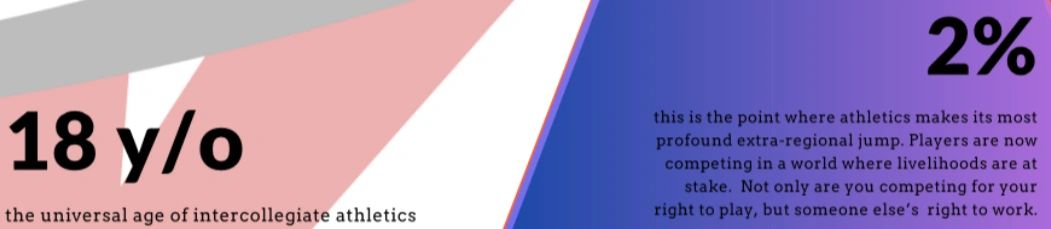
This is the point where athletics makes its most profound extra-regional jump. Players are now competing in a world where livelihoods are at stake. Not only are you competing for your right to play, but for someone else’s right to work.
It’s not often, believe it or not, that I get a Freshman coming home from their first year at school, saying, I should have been playing more this year, coach is confused. This is the creme de la creme – and once you are there, you know it. You are 18, an adult, and the childish cloak of “coach doesn’t play me because he doesn’t like me” is awfully thin, if not transparent. Put your head down and get to work – coach earns his seat in that office, by your earning your spot in that lineup.
… worth some thought.
STAGE #5 – 22 Years Old – The Universal Age of Professional & Semi – Professional Competition
Only 2% of 2% = .075% of the original 100% of the athletic population will make it to this level
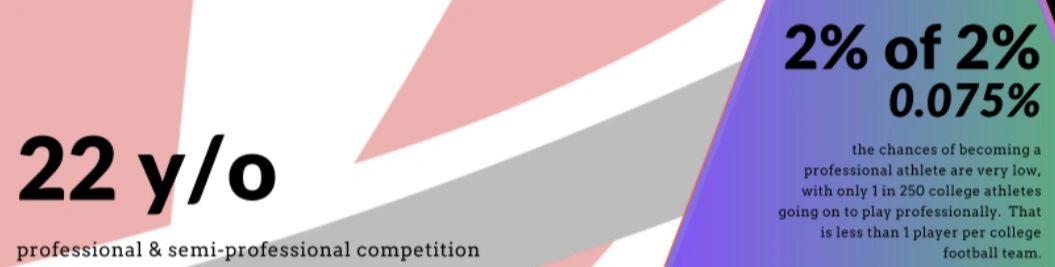
The chances of becoming a professional athlete are beyond low, with only 1 in 250 college athletes going on to play professionally. That is less than 1 player per college football team, that’s less than 1 player per 20 college basketball teams, less than one player per 30 college tennis teams.
… worth some thought.
Entitled vs. Exceptional
Now that we have unfolded the PAR model – there are two groups that I feel need to hear this most ~ the entitled player and the player experiencing excessive self-pressure to achieve. Remember we aren’t talking about generationally gifted players or genetic outliers.
We are talking the masses, more than likely, you.
Let’s dive into both…
The Entitled Player
Message to all youth athletes: “You are not entitled to play anywhere beyond 12 years old.”
you don’t have a right … TO PLAY
Often, youth athletes think they deserve to play forever. They were entitled to play “little kickers” at 7 or 8 years old, why wouldn’t they think of 14u travel ball the same way.
They have no other reason to think they can’t. As a kid – you only know what you know. You can only draw from your experiences – or the tactfully packaged experiences of trusted advisors.
As coaches, parents, and advisors, it’s our job to help our players see that reality. It takes hard work, preparation, sacrifice to reach each additional level. 2/3 of the youth lacrosse, soccer, and basketball teammates that they have known since age 5,7, and 9 will not be playing and competing in sports beyond the age of 12.
you don’t have a right … TO HOLD UP
Prior to the age of 12 (statistical average) a young athlete’s body is constantly changing, adapting, growing. They are built for the limited stressors that their sport, practices, and games put on their bodies. A sponge to all of the valuable stimulus sport can offer and resilient to collateral damage.
As players age and their bodies get bigger – they produce more force, the games move faster, growth becomes final, cell adaptations slow down, and players very suddenly need to recover from their practice & play. Even further, they need to train & prepare to hold up to the stressors of the game in order not to break down and experience injuries.
This is a harsh reality – the same way being cut from a roster is harsh – not many bodies are naturally gifted to play without preparation, tissue breakdown, and pain.
You are not entitled to play beyond 12 years old. The game jumps from a tool for youth development, to a fierce competition of the most prepared, in the blink of an eye.
The Self-Pressure to Achieve Player
On the complete opposite side of the coin, there are a large number of youth athletes who don’t understand how unique, special and fulfilling what they are doing is…

To them, the amount of time spent, hours of sacrifice, endless passion, and tireless preparation is…“normal”.
It’s not normal! It is extraordinary!

The question that looms is… why don’t some of these youth athletes realize they are so special? Why do they become consumed by crippling pressure to achieve instead of enjoying the journey and fruits of achievement.
The reason, I speculate – is the phenomenon of social circles and the people they surround themselves with.
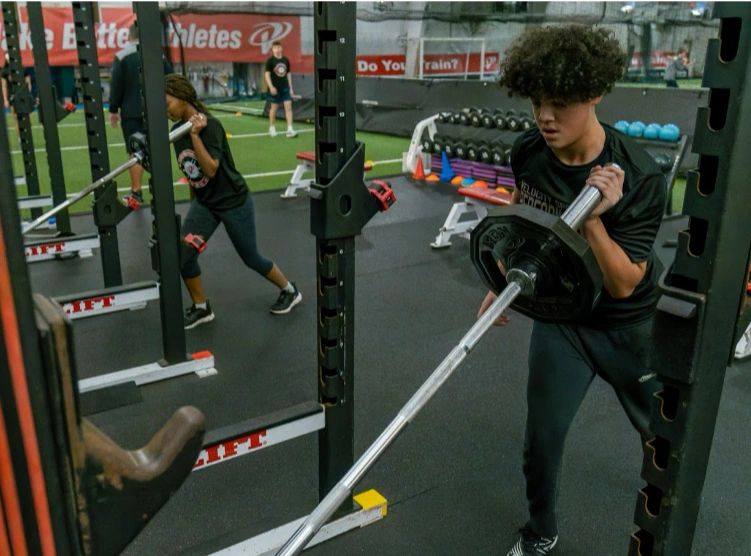
Yes, Billy, a 15 year old youth lacrosse player has been playing club since they were 8, made varsity as a sophomore, and has been training at Velocity for the past 3 years…but so are all of his friends! So he thinks it’s normal! When in reality…it’s not. Billy and his social circle are top tier in every facet.
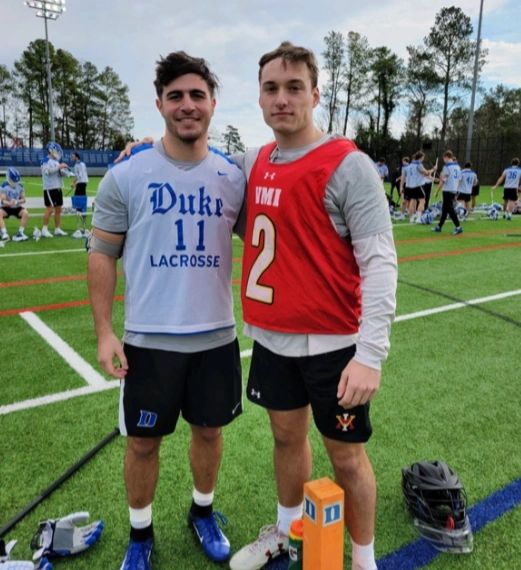
So again, our job as coaches, parents, and advisors is to help these athletes zoom out and balance their athletic standard. Because without the wisdom of a 10,000 ft view the joy of achievement can be lost in crippling anxiety, feelings of insufficiency and deterioration of the core values their parents put them in sports, at 5 years old, to learn in the first place.
… worth some thought
Now what? Don’t miss your shot!
Really, we could let natural selection run its course. But in today’s day and age, do we do that with anything else? Technology, capitalism, medical science, and creative genius has sunk its teeth deep into everything else we do. We are surrounded with oversimplified ideas in an increasingly complex world. We are not speaking about RIGHT or WRONG. We are talking about IN or OUT. And quite frankly, I like being IN it, whatever it is these days. Most people look at an 8 year old and think..“Just let them play and do their thing…there is no need for movement training or preparatory development.”
Fair enough…but you statistically just chose – OUT.
And maybe that’s the right move for your 5, 6 & 7 old. But once your youth athlete is an 8 year old, they are only one development cycle away from someone else having the power to tell them that they can or can’t play their sport anymore. Look at the statistics and then ask yourself if you are willing to let that be the definition of your child’s athletic career. Or, would you invest some time and resources in trying to make sure your child’s gifts are realized – that they are enjoying their ceiling, not lying on their floor.
Lots to think about…talk about…take action on and even dismiss, if it’s not for you and yours. See you in the gym!
Written by:
Jordan Bledsoe – Owner & Director of Performance
Jake Lebovitch – Sports Performance Coach & Liaison to Athletes
