

Would You Drive A Lamborghini With No Breaks
“Would you drive a Lamborghini with no brakes?” There is only one right answer to this question… NO! Now, let’s make the question more sports specific. “Would you want to increase your ability to accelerate without having the capacity to decelerate?” The answer remains the same… NO!
Today’s topic of discussion is – Deceleration.
What is deceleration?
In simple terms, deceleration means slowing down. However, in the context of sport performance deceleration is described more in depth.
According to the NSCA:
“To decelerate effectively, the athlete must absorb force, primarily through flexion of the ankle, knee, and hip. This action is aided by an initial rearward body lean, which is opposite to that of acceleration. The extent of the lean depends on the initial velocity of the athlete. The muscles in this action decelerate the movement of the body’s mass under a high eccentric (lengthening action) load, controlling the rate of deceleration to either a standstill or to a speed at which a change of direction or skill can be executed.”
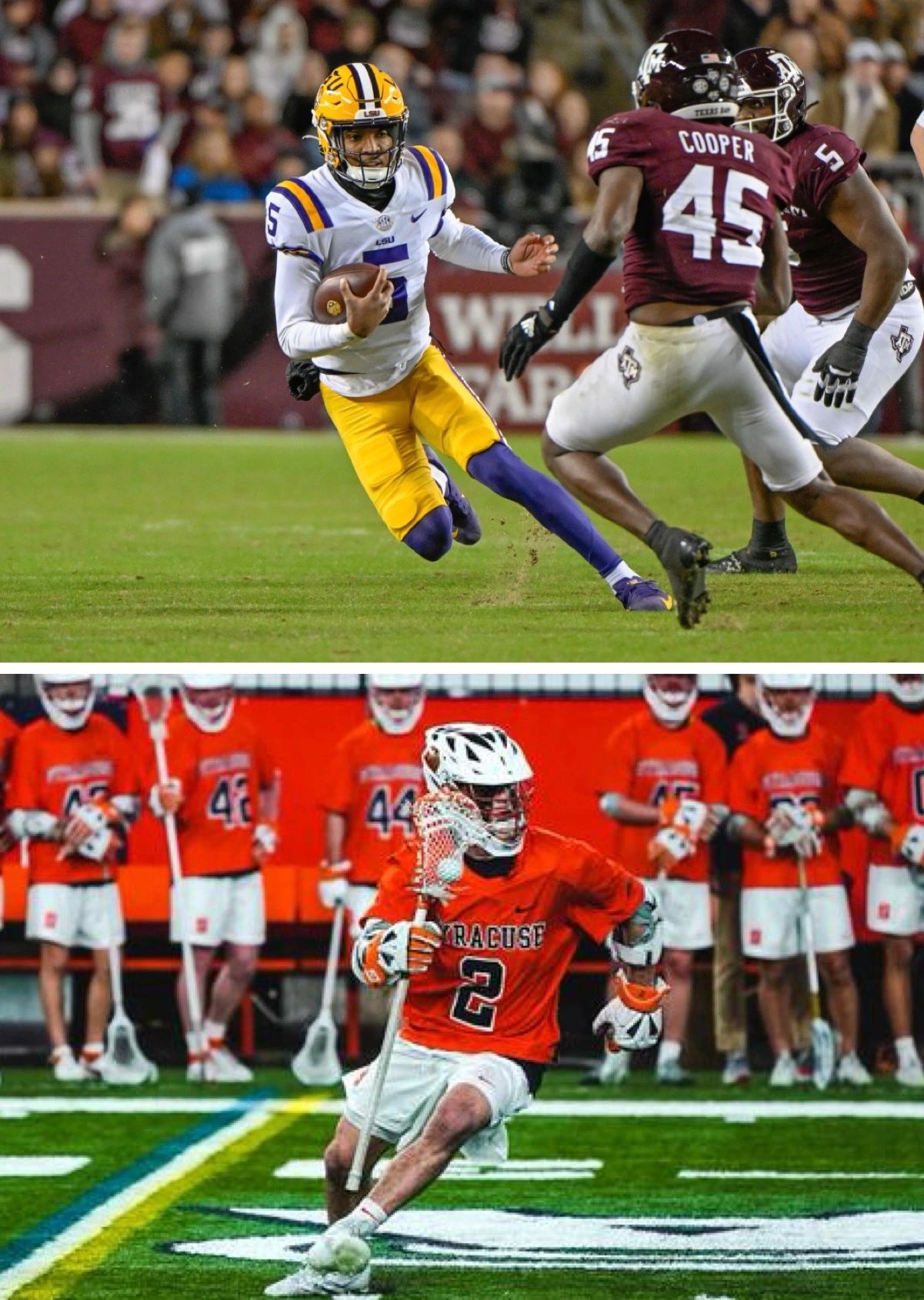
Another way to look at deceleration is the transition between the eccentric and concentric phases within a muscle contraction. Essentially, the muscle transforms energy from the lengthened (“loaded”) position to the shortened or (“explosive”) contraction. Everyone wants to get more explosive… but trying to increase the power of the explosive contraction without being able to properly “load up” that power through deceleration loses out on tons of explosive power capacity.
The last way to look at deceleration is explained well by NASM:
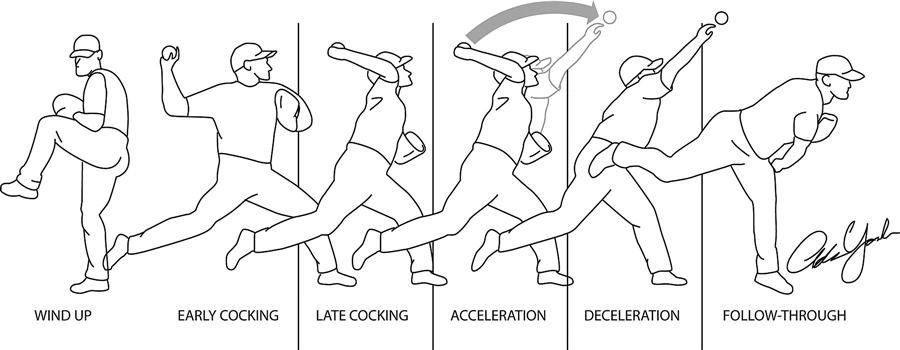
“The other way to look at deceleration is the actual slowing of motion, as in the slowing of the arm as it releases a ball in a throw. It has to slow down and stop after all the effort to speed the arm through the throwing motion. In both of these examples of deceleration, the inability to slow down efficiently is where excess joint stress can occur and may eventually lead to increased opportunity for injury.”
As athletes, our number 1 priority is making sure we can be on the field at all times. Therefore, exposing our bodies to high amounts of force without having the ability to absorb those forces is going to put our bodies at risk for more injuries. By increasing the ability to properly decelerate, we increase the ceiling of our explosive power capacity AND decrease our chances of getting injured. That sounds like a recipe for success…
Just learned the importance of deceleration… Now what?
Now… It’s time to get in the weight room and train those breaks!!
Our VSP training continuum allows our athletes to be training deceleration and acceleration every 3 training days!!
Here’s an inside look at some of our favorite exercises we use to help our athletes improve their deceleration capacity:
- Depth Drop Variations
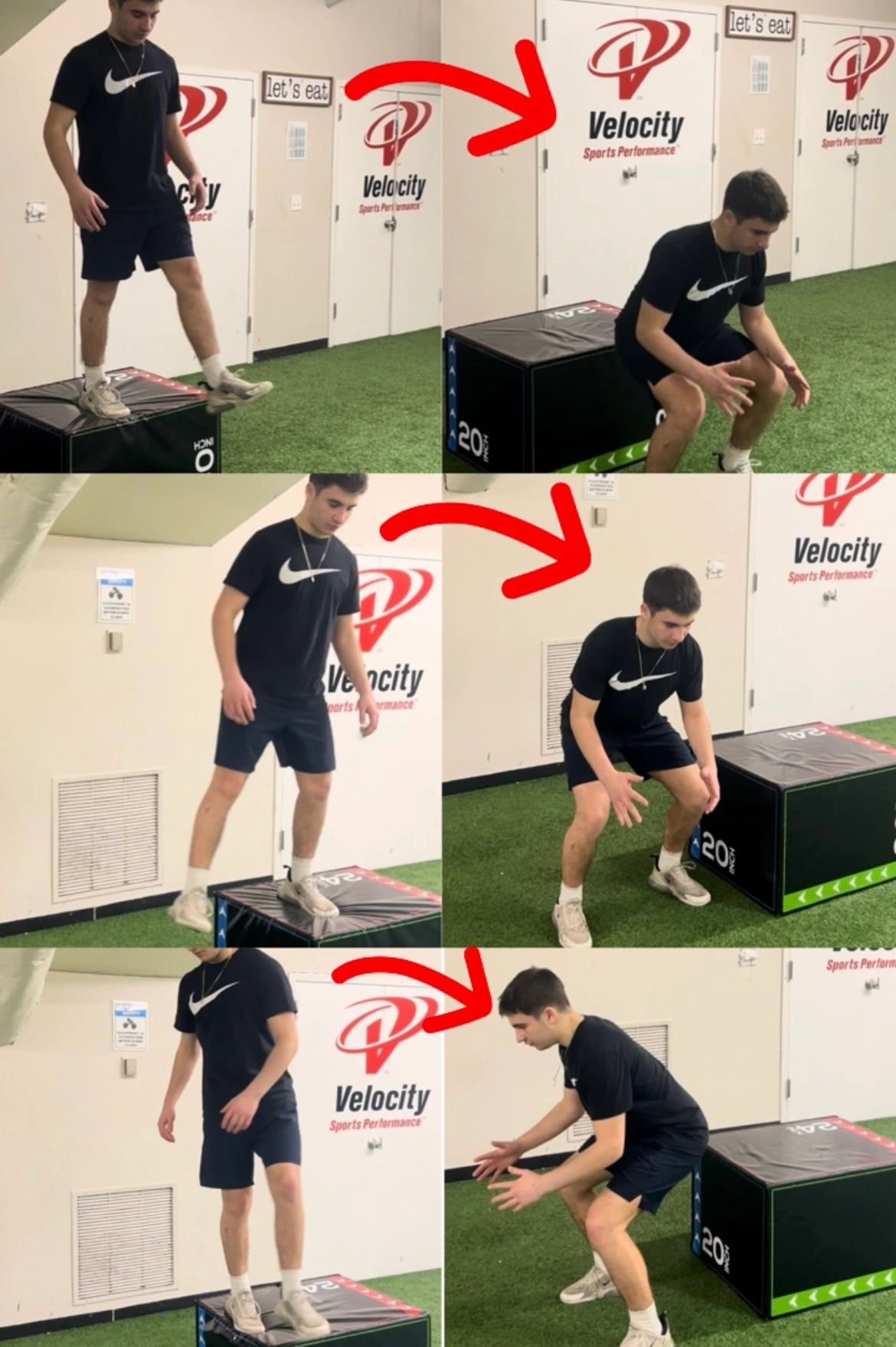
Depth Drops are a great way for athletes to train deceleration in a variety of different planes of motion. You can manipulate this exercise to work deceleration in the sagittal plane (up/down), frontal plane (side/side), or transverse plane (rotational). By stepping off the box from an elevated height, the athlete is required to decelerate upon impact to maintain an athlete position into landing. This drill has been extremely helpful in lower limb injury prevention and increasing overall deceleration capacity.
2. Band Assisted Lateral Decelerations
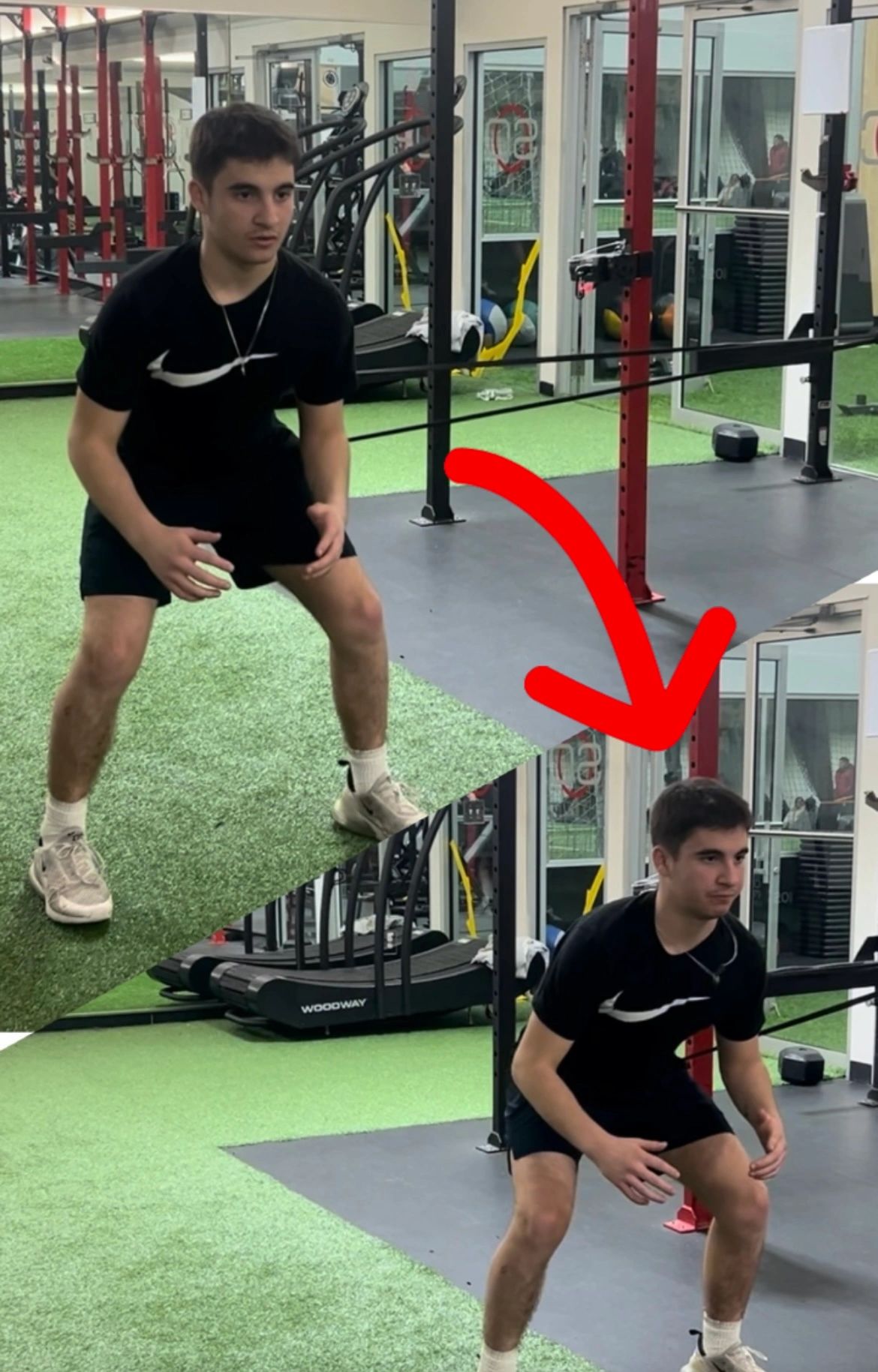
Band Assisted Lateral Decelerations are one of our favorite ways to train deceleration when specifically working in the frontal plane (side/side). For athletes who require quick lateral movements within their performance on the field or court, (for example: basketball, soccer, etc.) this deceleration drill is one of our favorite exercises to utilize. By using a band to assist this movement, we are adding extra speed/force that the athlete can not generate on their own. This requires even greater amounts of muscular co-contraction when decelerating and can help increase our ability to decelerate by an even greater degree.
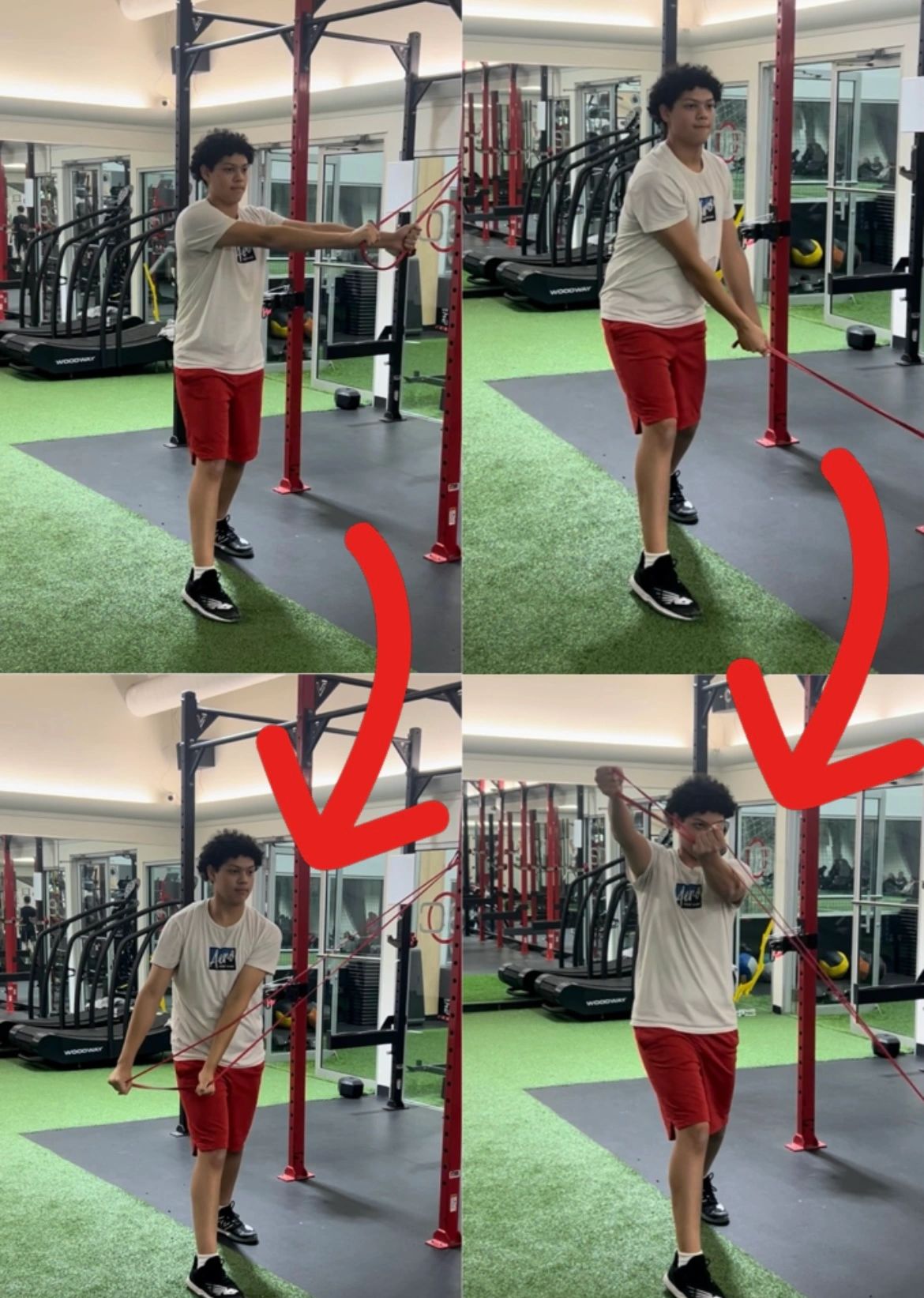
3. Up/Down Band Chops
Up/Down Band Chops can be used to train deceleration of the upper body. With sports such as baseball, softball, and lacrosse for example, athletes need to have the ability to decelerate their torso and upper limbs during their “throwing” motions. This drill takes the lower half out of the equation and allows athletes to specifically train the deceleration capacity of their torso and upper body while maintaining an athletic position.
Although, we gave you a snippet of how we like to train deceleration, this is only a slice of the pie. There are many ways we, here at VSP, train our athletes to increase their ability to properly and efficiently decelerate. Curious on how we do it…? Come see for yourself!!
Now that you know what declaration is, why it’s so important, and some exercises to start working on it… what are you waiting for? Get to work on driving that Lamborghini!! But don’t forget the breaks…
Written by:
Jake Lebovitch – Sports Performance Coach & Liaison to Athletes
